
Rivers Remember What We Forget
Wilson reflects on some of the lessons rivers hold for us, and opportunities for engaging in learning at St James’s.
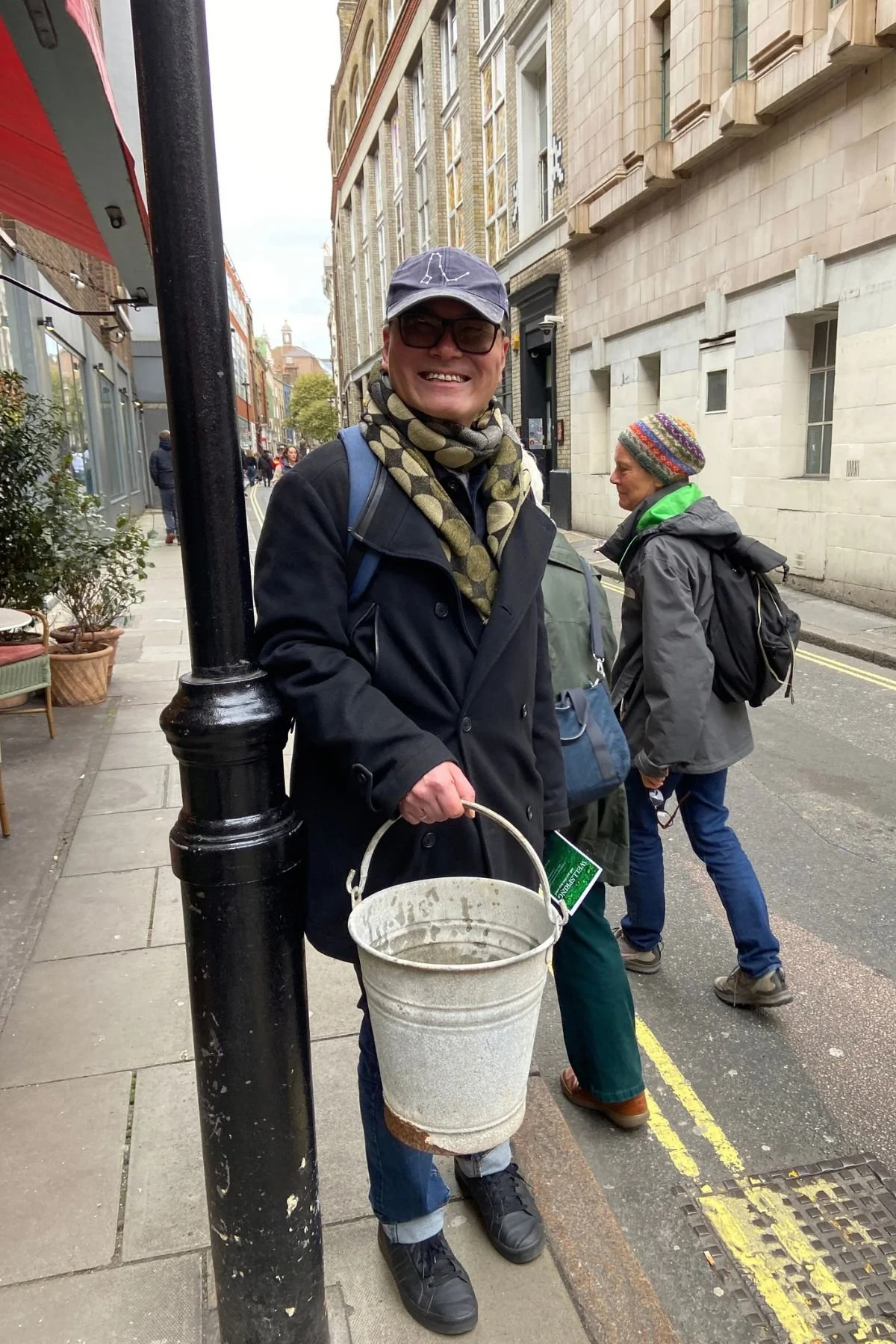
Wilson Wong on parish ‘Wellspring’ pilgrimage
Freshwater habitats occupy less than 1% of the Earth's surface, yet they support at least 10% of all known species (WEF). Wetlands sustain around 40% of plant and animal life, while rivers and associated ecosystems provide livelihoods, water, food, energy, and ecological services upon which more than a billion people depend. The value of these services is about US$47 trillion dollars each year (Ramsar.org; World Bank).
It is no coincidence that four of humanity's earliest great civilisations emerged along rivers: the Nile, Tigris-Euphrates, Indus, and Yellow River systems. Human civilisations did not merely develop beside rivers; rivers shaped them.
The river is also one of Scripture's most enduring metaphors.
"A river flows out of Eden to water the garden" (Genesis 2:10).
"They are like trees planted by streams of water, which yield their fruit in its season" (Psalm 1:3).
"There is a river whose streams make glad the city of God" (Psalm 46:4).
"Let justice roll down like waters and righteousness like an ever-flowing stream" (Amos 5:24).
"Then the angel showed me the river of the water of life, bright as crystal" (Revelation 22:1).
Throughout Scripture, rivers signify more than water. They represent life, blessing, wisdom, justice, healing, and God's sustaining presence. From Genesis to Revelation, rivers connect creation, human flourishing, and divine purpose. Life flows from a source beyond ourselves, and life depends upon remaining connected to that source.
Rivers sustain biodiversity, irrigate crops, and generate significant proportions of the world's electricity. Yet they are also among the most threatened ecosystems on Earth.
Humanity was born from rivers, remains dependent upon rivers, yet increasingly behaves as though rivers are optional; infrastructure to be managed, engineered, exploited, or discarded. We dam them, divert them, pollute them, and channelise them. We calculate their economic value while often overlooking the ecological systems that make that value possible.
The biblical river metaphor challenges a deeply embedded assumption of modernity: that humans stand apart from nature and can treat rivers primarily as assets for extraction and control. When rivers become nothing more than economic instruments, we risk losing something of our own humanity. We forget our dependence. We forget humility.
River lessons
Interdependence. A river exists only through countless relationships between rainfall, soils, wetlands, groundwater, plants, animals, and people. Every action flows downstream. Pollution today affects communities tomorrow. Excessive extraction in one place creates scarcity elsewhere. Rivers remind us that consequences rarely remain local.
Humility. Rivers operate according to rhythms and limits: floods, droughts, seasons, and sediment cycles. Modern technology can create the illusion that such limits have been overcome. Dams, pumps, and engineering schemes may postpone consequences, but they cannot abolish ecological reality. Rivers reminds us of the wisdom in boundaries.
Reciprocity. Healthy rivers nourish life. In return, flourishing communities bear a responsibility for their care. Rivers are not “externalities”. We understand reciprocity in our relationships with family, neighbours, and future generations. The same principle applies with creation.
Justice. Amos describes justice not as a possession but as a flow. Healthy rivers flow freely. Healthy societies depend upon flows of opportunity, knowledge, compassion, trust, and responsibility. When flow is obstructed, systems stagnate. This is true ecologically, socially, and spiritually.
Restoring What We Have Forgotten
The first step I found useful is ecological literacy. Understanding watersheds, biodiversity, groundwater, and ecological interdependence deepens environmental awareness and spiritual understanding. Learning how a river system functions reveals how profoundly connected we are to the wider web of life. To begin, rebootthefuture.org runs a Rivers & Responsibility training programme (I’m a trustee). At SJP, we have the opportunity to take part in a Carbon Literacy course and events like Encounter at the Wellhead.
The second step is stewardship rather than ownership - treating resources as gifts held in trust rather than possessions held without obligation. It means asking whether future generations will inherit healthy ecosystems and whether we are taking more than can be renewed. Maybe try working with the London Citizens Thames Water campaign.
The third step is gratitude. Every glass of water, every harvest, every livelihood depends upon healthy rivers and watersheds. Gratitude shifts us from entitlement towards responsibility.
The Bible begins with a river and ends with a river. That seems significant.
Our future will not be secured by technology, regulation, or infrastructure alone, important though these are. It will depend upon recovering a deeper understanding of humanity's place within the living systems that sustain us.
Let the rivers remind us of that we’ve chosen to forget. They teach humility in a culture of control, interdependence in an age of individualism, and stewardship in an economy of extraction. Most importantly, they remind us that the welfare of future generations depends not only on what we build, but also on what we choose to preserve, restore, and pass on.
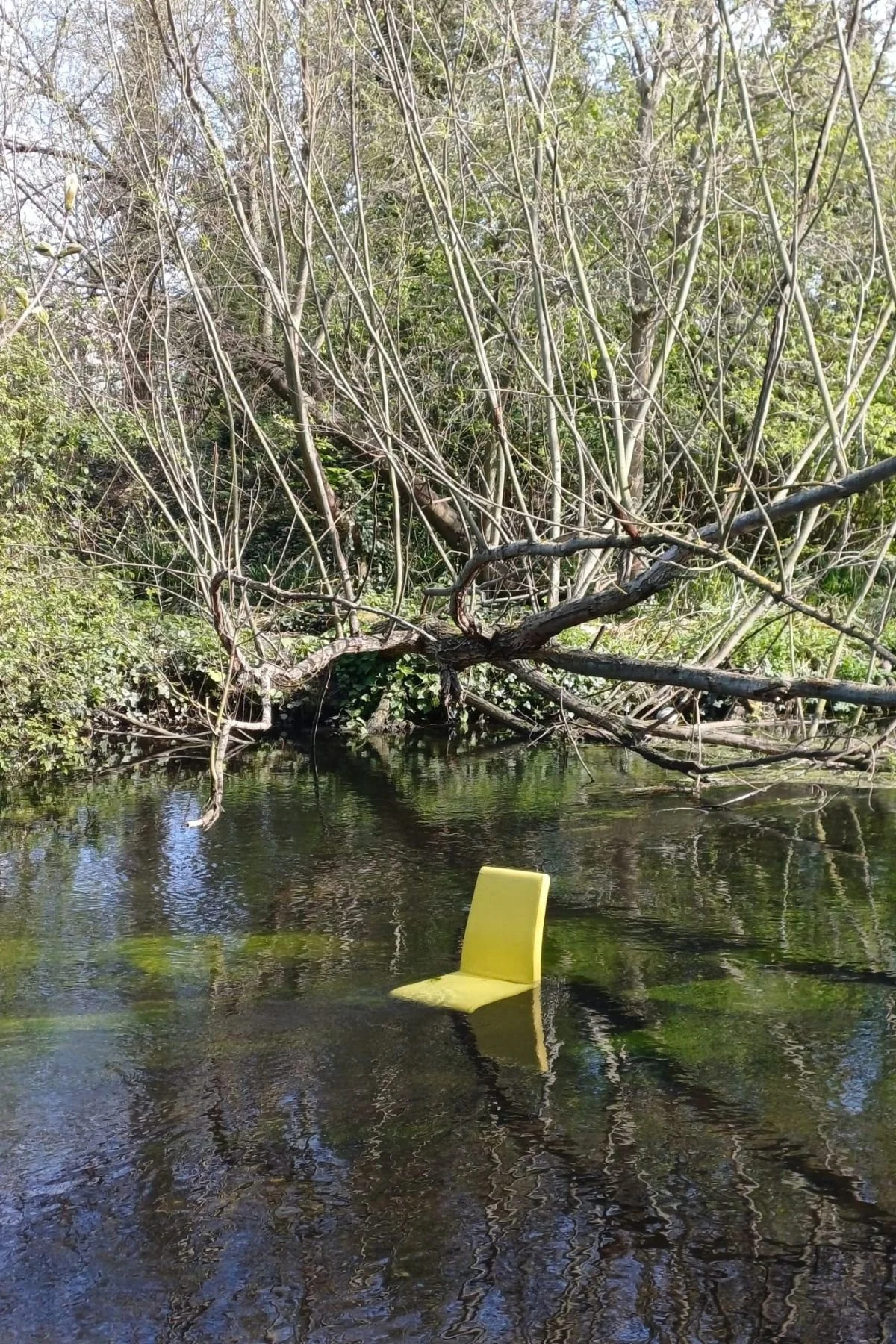
Seat in the River Wandle by Wilson Wong
Collaborate With Us
We're always open to new ideas and creative partnerships that bring multiple perspectives into focus in the service of Earth Justice. Please get in touch.
Explore Our Projects
Explore our evolving archive of multi-disciplinary, collaborative projects. We value art, poetry, science, faith, history, community engagement and more, and the creative spaces that open up between them.