
Wellspring
WELLSPRING is a multi-disciplinary project from the Earth Justice team which responds to the wells and boreholes of St James’s parish and further afield.
In 2026 we explore time-depth, geology and memory; water moving through rock and our bodies and local history; water as a metaphor for justice, and the extractive drillings into Earth; scarcity and abundance; wells and water-places as sites of pilgrimage, reverence and gathering.
We set off with a gentle pilgrimage round St James’s parish wells on Sunday 15th March 2026, 1.30 - 3.00pm.
Wells have taken care of us for thousands of years. They are one of our most significant relationships, woven into our scriptures, folklore and myths. They are the site of life-changing encounters in the Hebrew scriptures and in John’s Gospel. Until recently, the daily meetings at the well and street pump were at the centre of our communities. Wells represent spiritual depth, the thirst for knowledge, wisdom, and God's life-giving presence.
The tradition of Holy Wells has pre-Christian origins in Britain and Ireland, and holy wells are often located at the sites of sacred springs. In times past, there were thousands of these special places all across these islands. In the Celtic tradition, when wells began to be associated with particular saints, the wells were thin places, connecting us to the sacred presences of water and light. They were revered as sites of healing. One example is St. Bride’s church in Fleet Street, a place of pilgrimage dedicated to St. Brigid, which traces its origins back to Roman Londinium.
St James’s Parish Wells: a pilgrimage
We begin close to home with a gentle pilgrimage around the sites of our ten historic parish wells. All our wells were sunk between about 1820 and 1912, usually by private companies in need of water for their businesses. None of them are open or visible today! Our pilgrimage visits historic sites and encourages reflection on what is beneath our feet.
Ten Wells
Our parish wells are effectively long tubes or pipes. Even though they are closed now, we can imagine them a century and more ago, filled part-way with water (each to a different height) and open to the air. A pipe open at one end becomes a musical instrument when air or water vibrates inside it. We can imagine this happening inside our wells over time as water tables rise and fall and the activities of millions of Londoners shake the ground beneath our feet.
Each well has a characteristic pitch (frequency) and many related harmonics determined by the length (depth) of the well and the temperature of the air or water inside it.
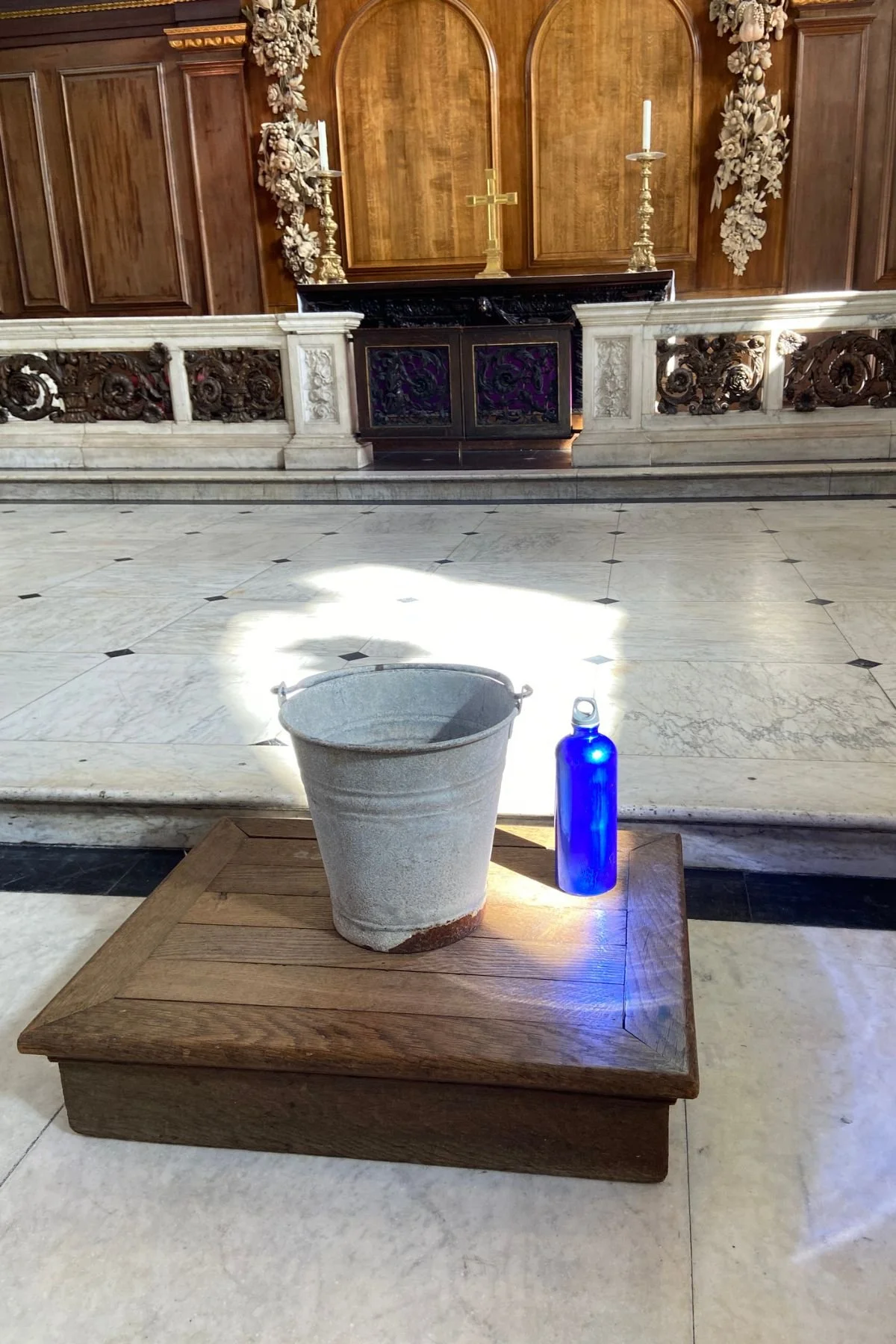
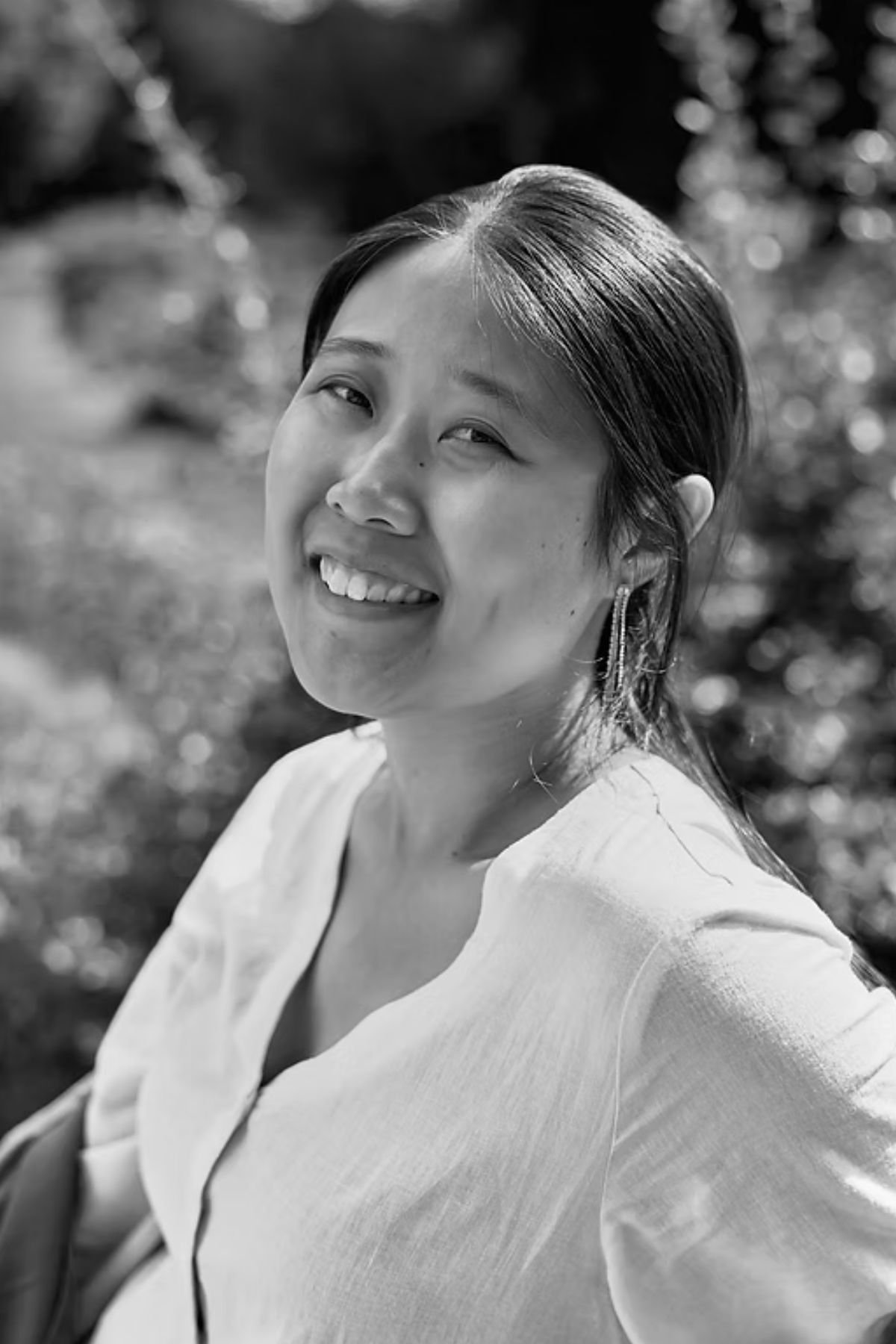
Composer and sometime St James’s lay singer Sze Ying Chan works with the song of our wells in her sound installation based on these frequencies. Her installation brings our wells into the Sunday Eucharist on 6th September 2026 as active participants.
Deborah Colvin’s collaboration with the river Chess in the Chilterns through the Living Waters programme brings the voice of this rare and beautiful chalk stream to the piece through the lens of Sara Mark’s video installation. River Chess is part of the same overground-underground flow that feeds our 10 wells, and water from river Chess was brought to the Sunday service.
Deborah has written a reflection on this installation and its relationship to liturgy.
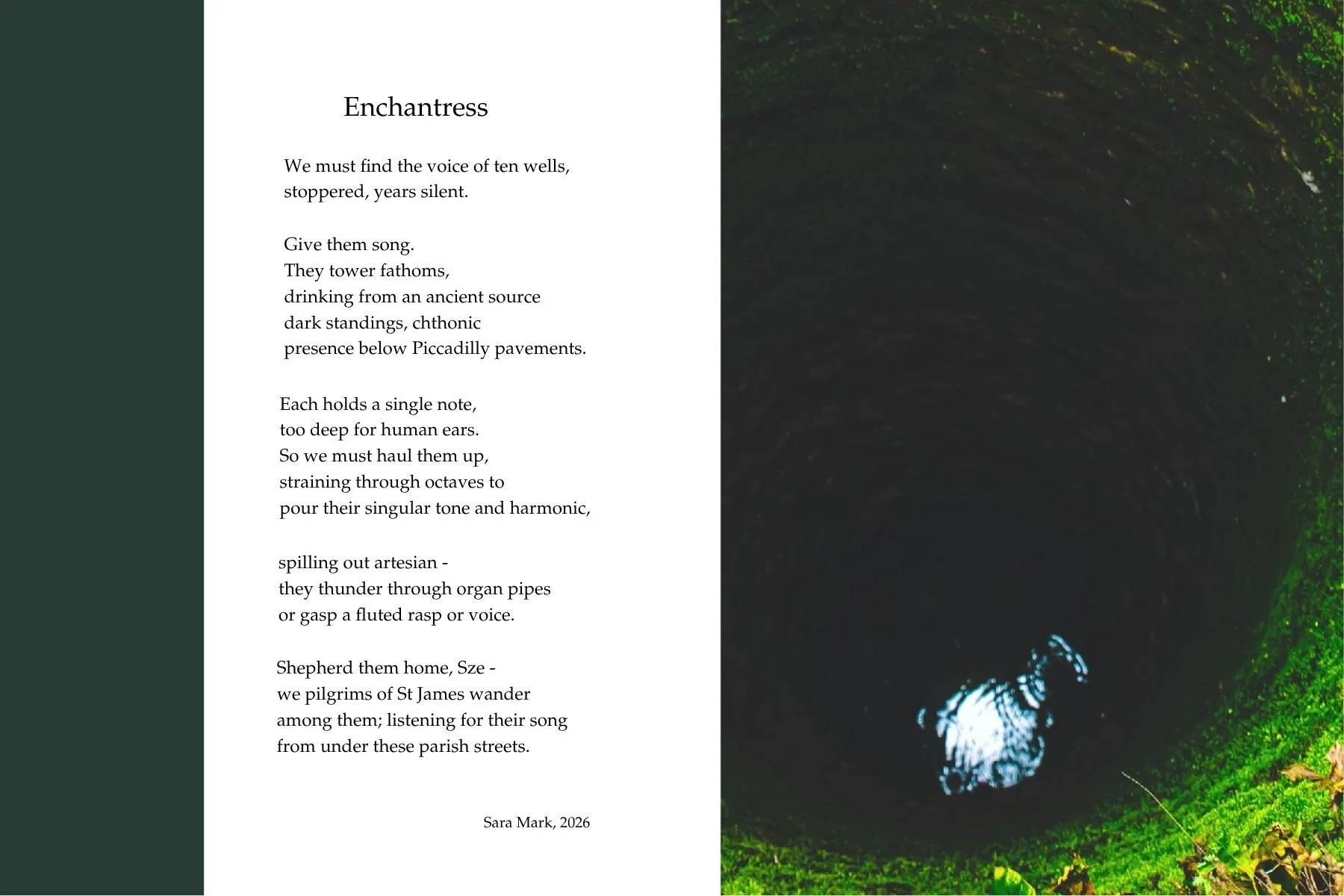
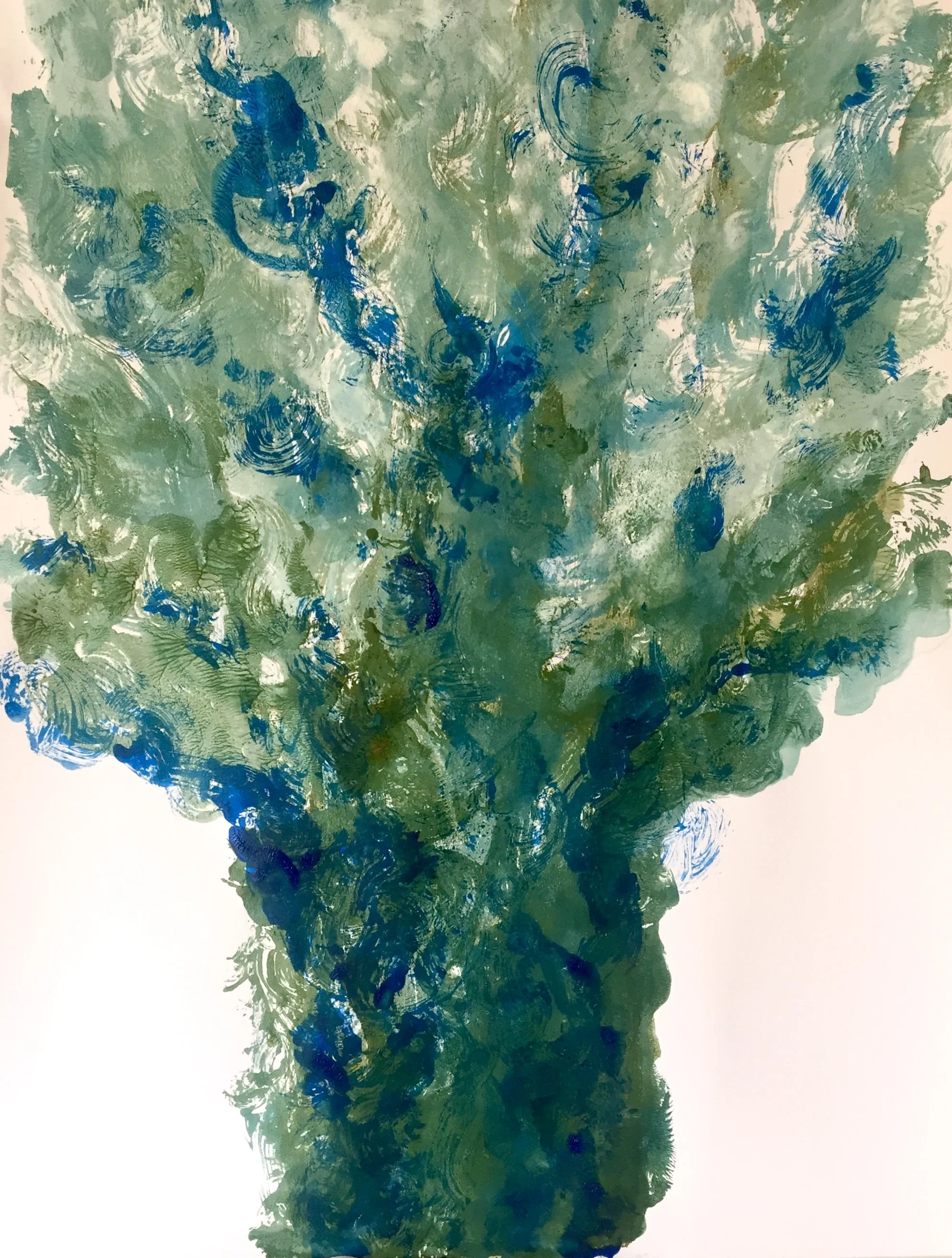
Sara has written this commissioning poem.
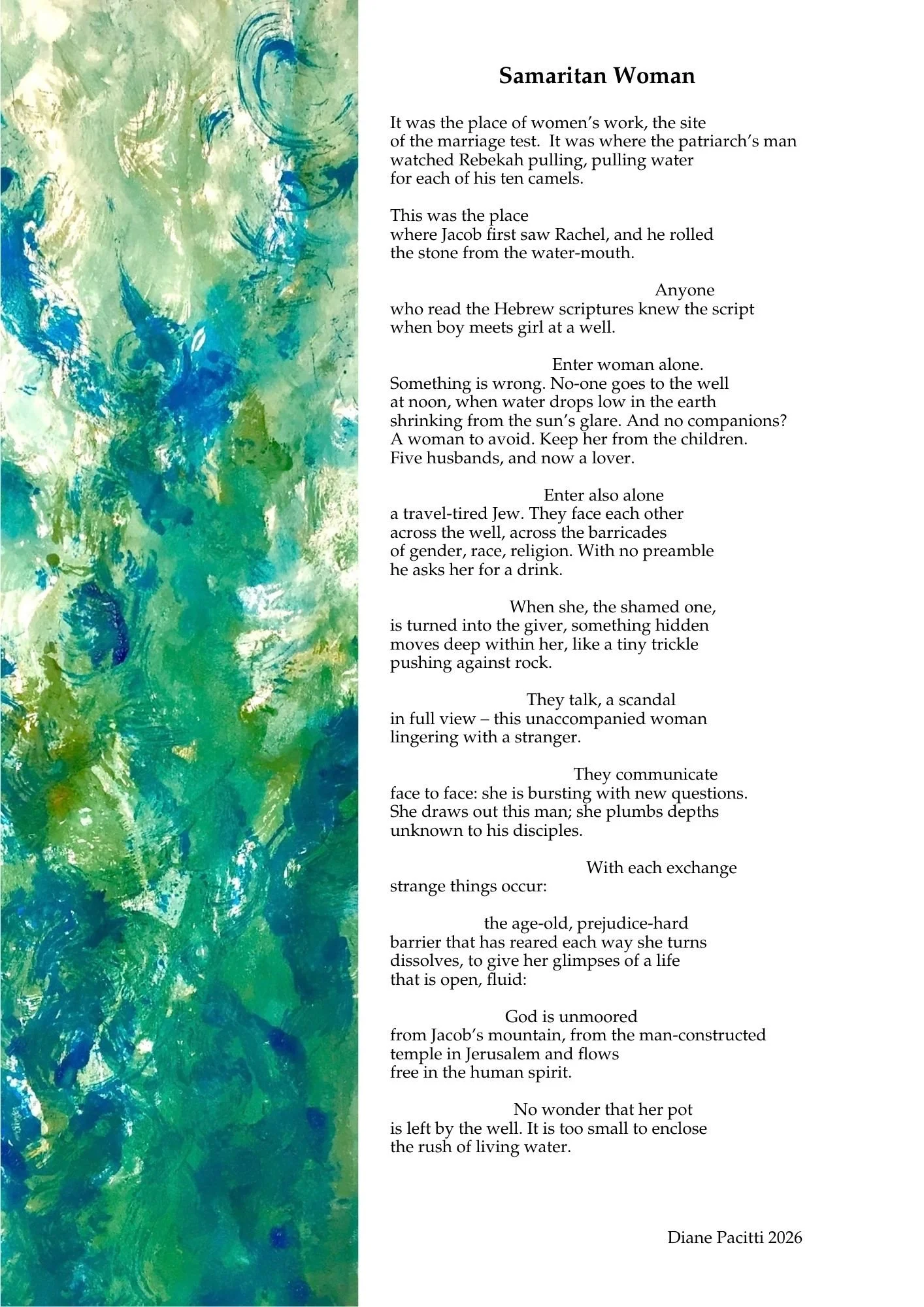
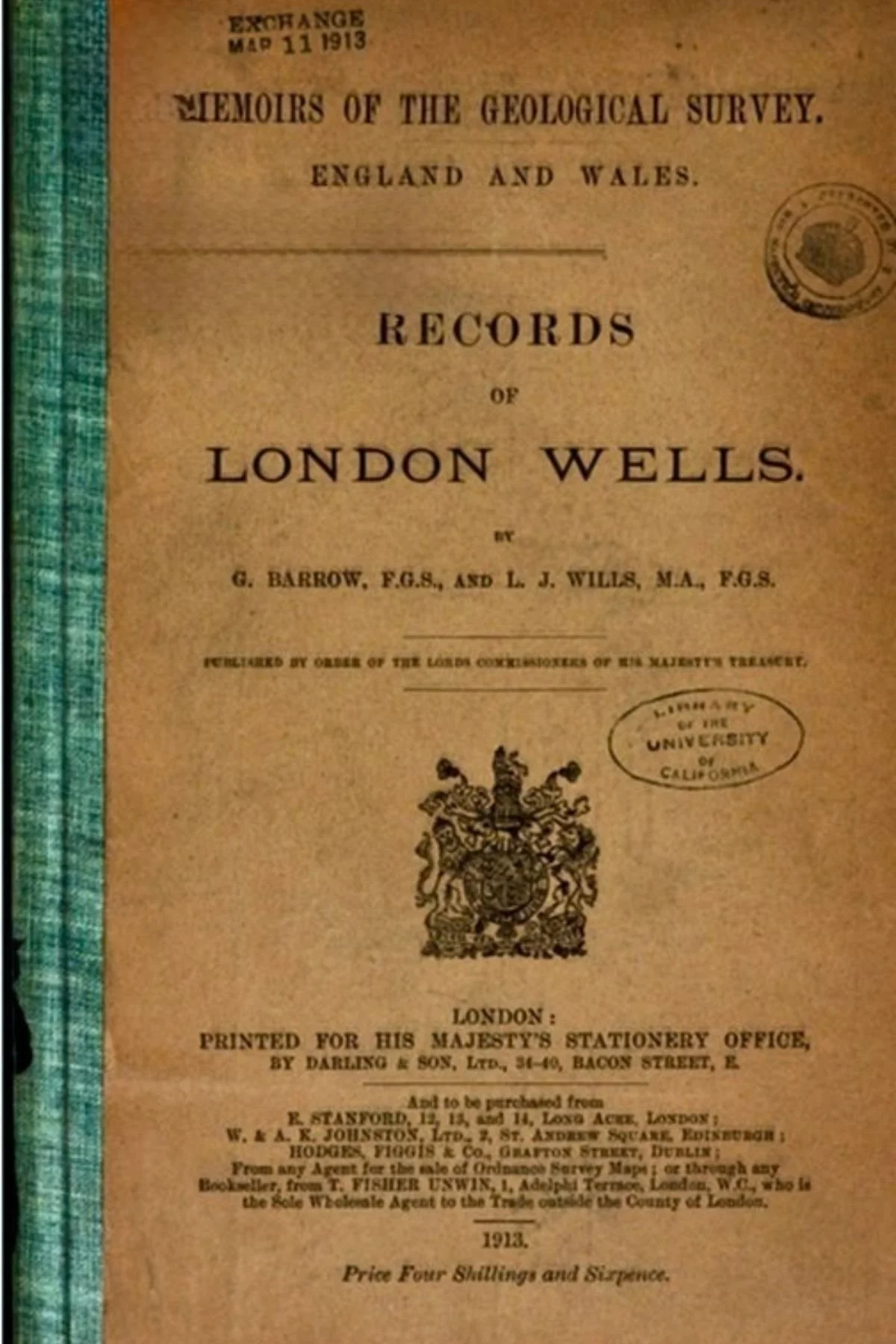
Record of London Wells
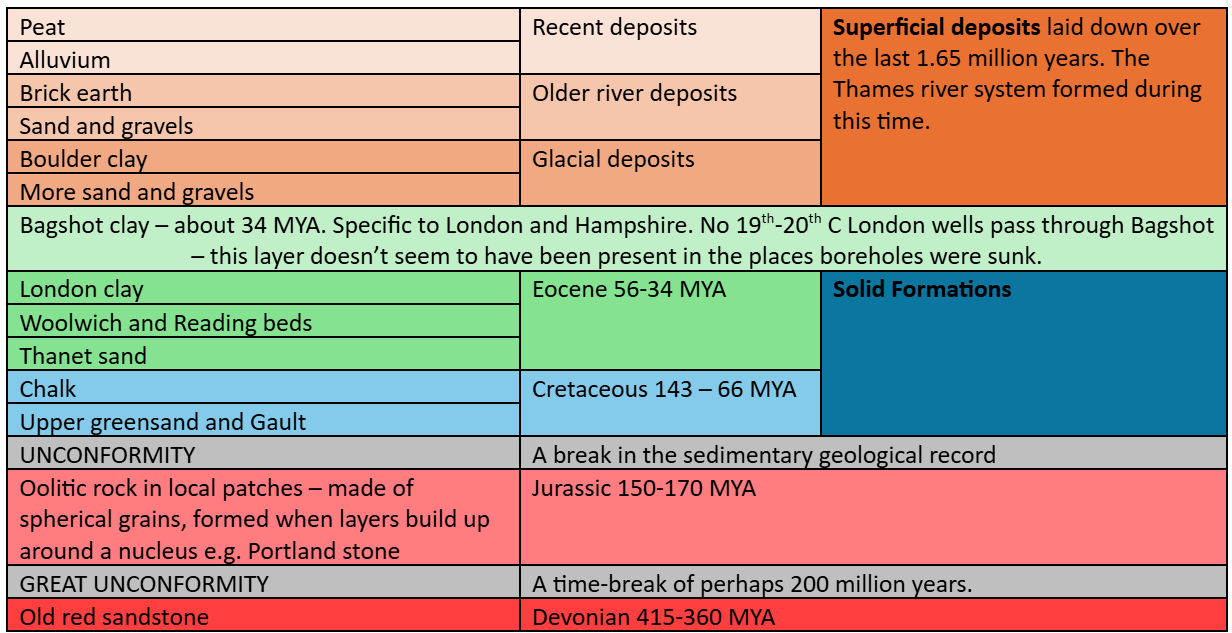
We discovered this amazing book, published in 1913, in the London Library in St James’s Square, right behind the church, and used it to make the diagrams and geological storylines below. At the time, the Geological Survey office was at 28 Jermyn Street.
At a time when London’s population and industry were rapidly expanding, reliable access to clean water was of critical importance. This book combines geological observations, borehole records, water levels, and stratigraphic data to provide a comprehensive survey of the city’s underground hidden landscape.
The preface tells us that ‘During the last few years an exceptionally large number of borings to obtain water have been made in the London area’. This activity led to a critical drop in underground water levels in the early 20th century, and radical action was needed to re-set London’s relationship with its aquifers. What can we learn about living in right relationship with the life-sustaining system under our feet in our own time of rapidly rising water levels?
This diagram of our wells gives an indication of their relative bores (diameters) and depths. For comparison, the deepest point on the London tube network (part of the Jubilee line) is 220 ft (69m) below the surface. Underground water flows into the wells from both the chalk layer and the sands and gravels overlaying this, and rises up the well under pressure from below.
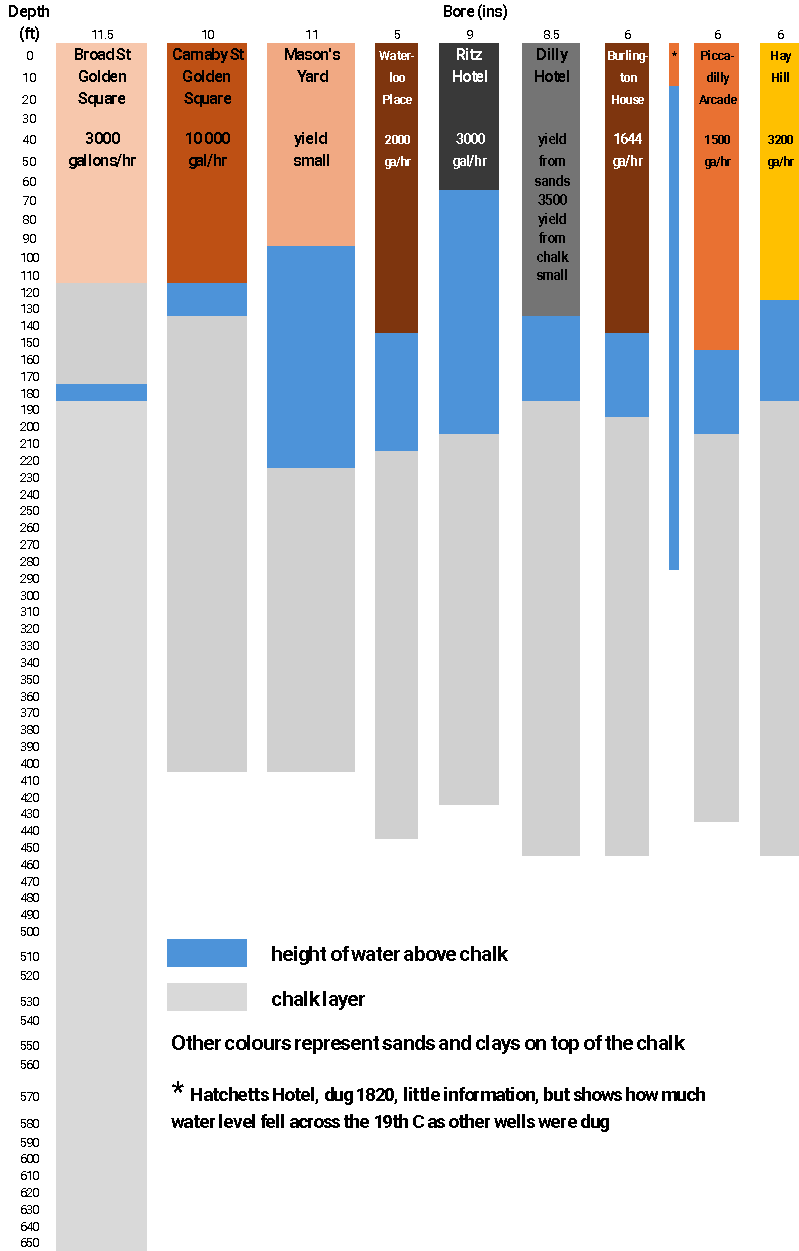
The character of our wells is determined by the geology they pass through. Traversing just a few hundred feet, each well tells a 150-million-year story.
Piccadilly Well
Among the rushing feet
a passage punched
through humus, gritty gravels, sand, brick earth
down into chalk and clay
into layers of deep time
a connecting rod
a life line whose living waters fed
insects, birds, people, drawing close
Its own communities
and even now
could link cretaceous seams of Gault clay
with our brittle surface world
place Eocene chalk
in dialogue with the Ritz.
It longs to catch the clouds
inside its upturned glass
which at noon might be new-minted
as a gold coin of sun.
It longs to send the sky
slopping, splashing light
to toss it in wild-flying drops
from a bucket rising fast
through its circular core of air.
This tube of slippery stone
possessed its own distinct voice
a pipe which was played by a passing wind
it is now a stoppered mouth;
a blindfolded eye
closed by a concrete clamp.
Now plunged for more than a century
in earthy pungent dark
it waits
a black pool of silence.
Diane Pacitti
Sara Mark
Explore Our Projects
Explore our evolving archive of multi-disciplinary, collaborative projects. We value art, poetry, science, faith, history, community engagement and more, and the creative spaces that open up between them.
Collaborate With Us
We're always open to new ideas and creative partnerships that bring multiple perspectives into focus in the service of Earth Justice. Please get in touch.