
SWARM
From April to August, life-size puppet animals will sweep through city centres on a 12500-mile journey from the Congo Basin to the Arctic Circle, fleeing climate disaster and accompanied by events and performances along the way.
THE HERDS highlights disruption to large animal migration, but there are many smaller species of birds and insects who already make this huge journey south to north across the globe and whose migration routes and ability to survive are already affected by climate change. Even the amount of Saharan dust blowing north to Europe has increased 8-fold in recent years due to desertification.
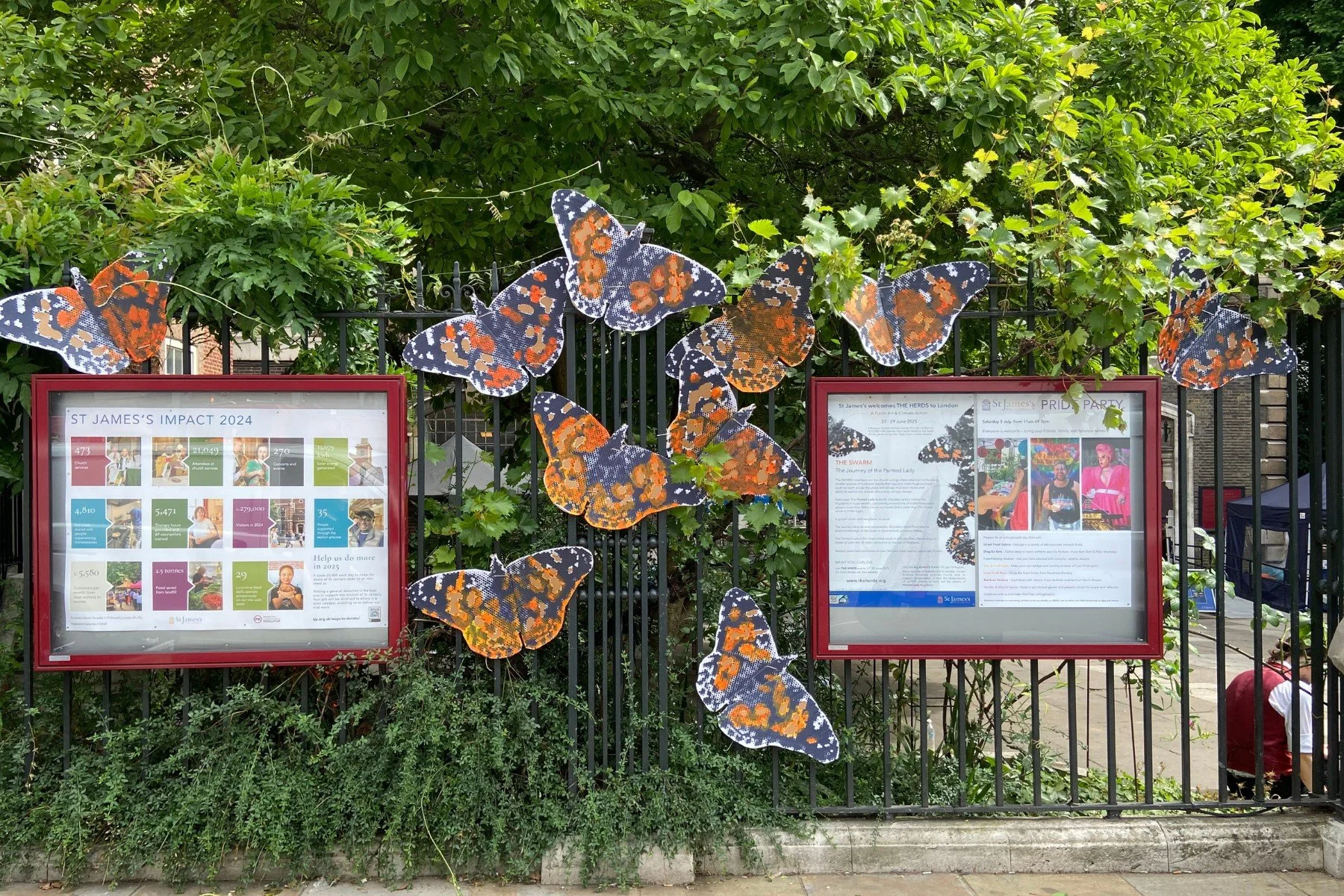
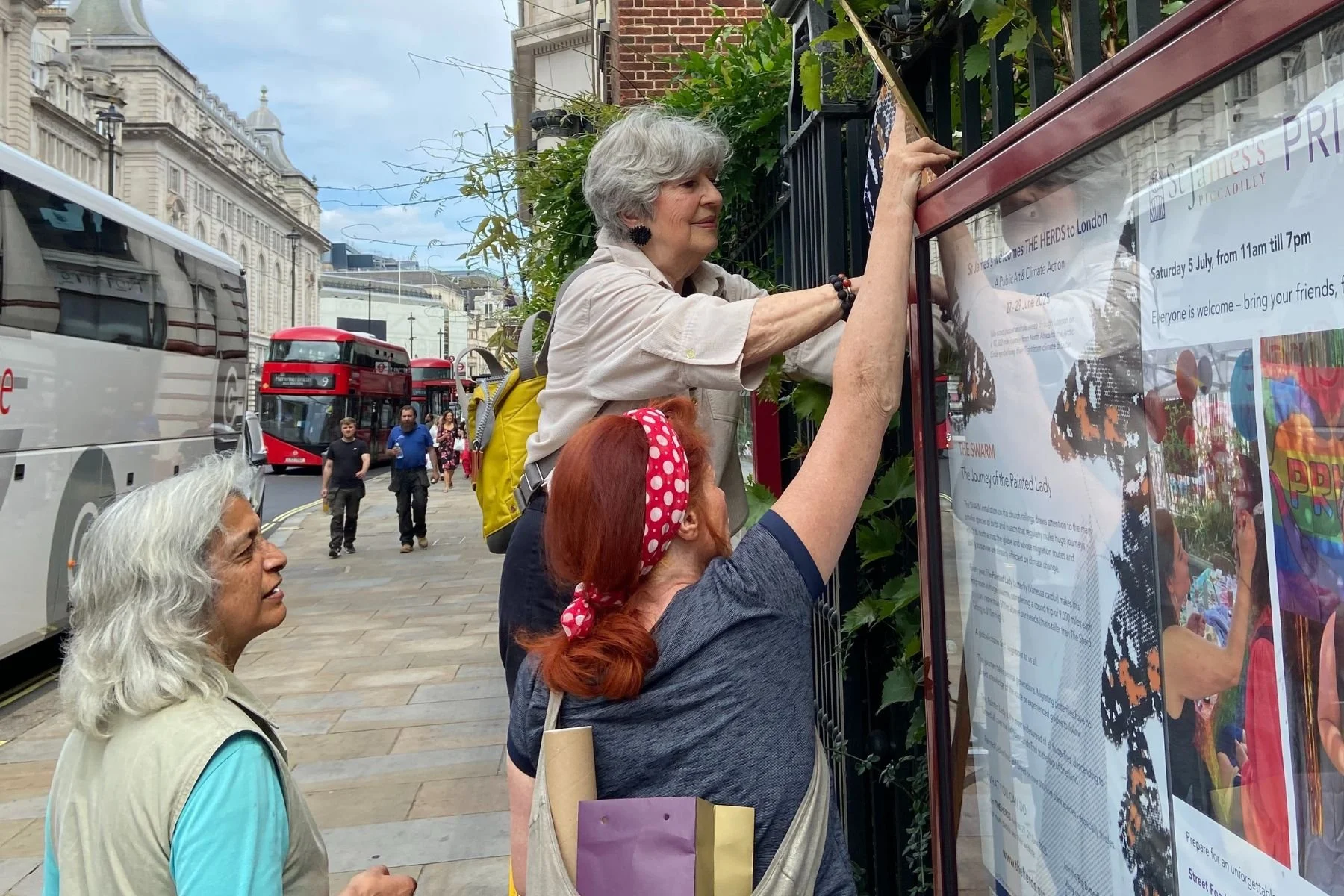
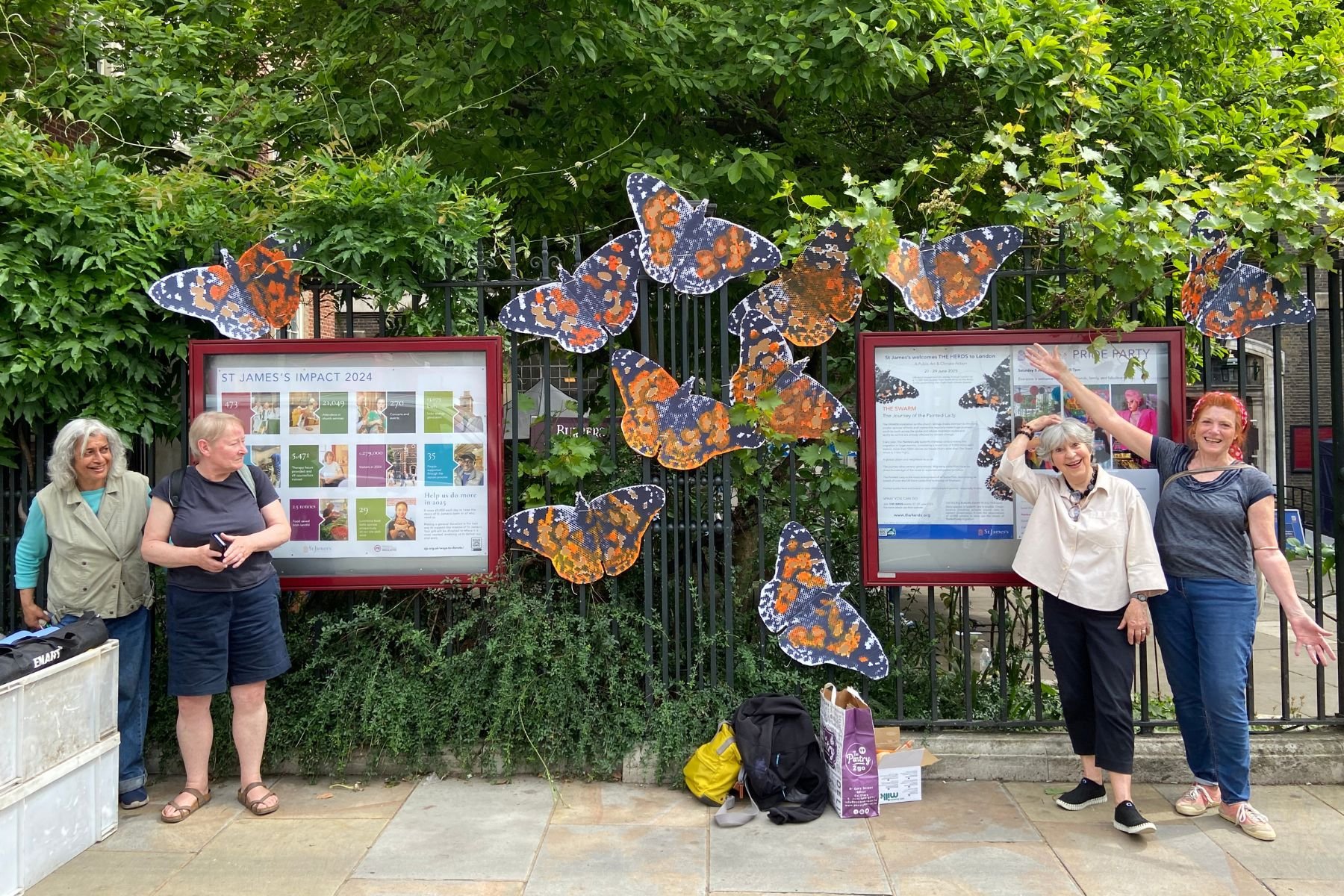
St James’s welcomes THE HERDS and we greet this migration with our own SWARM of Painted Lady (Vanessa cardui) butterflies displayed on the Piccadilly railings while THE HERDS are in London.
Painted Lady Butterflies
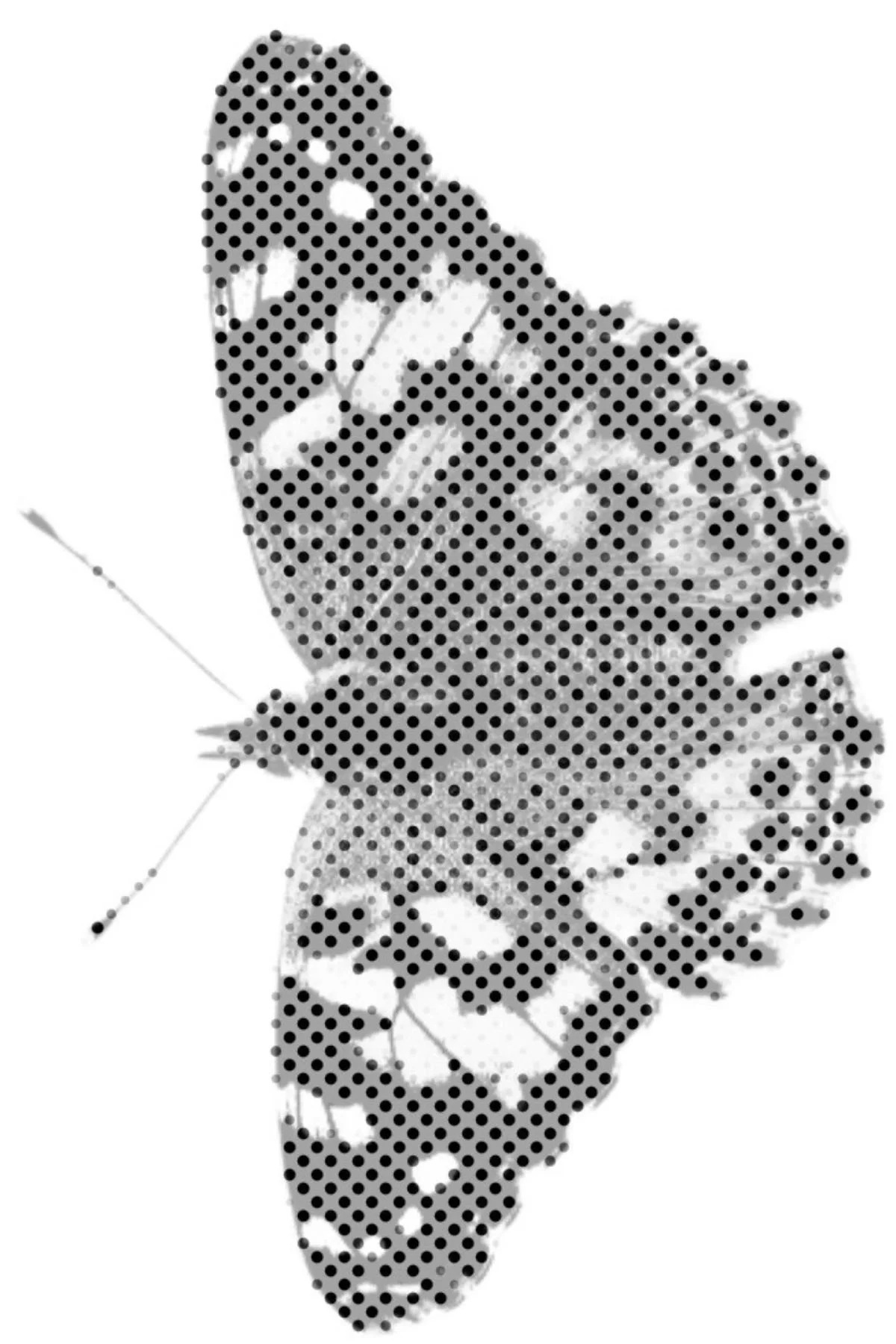
The Painted Lady is one of the most widespread of all butterflies, a true global citizen and neighbour to us all. Associated with over 300 host plant species, it has resilience and survival built in. Its migrations are bigger and more spectacular than the much better-known Monarch butterfly movements in America. Unlike migrating birds, no individual butterfly completes the whole round trip, so individuals have no experienced leaders to follow. Those arriving back in Africa may be several generations removed from those who set out for Europe the previous Spring. How all this was worked out is an astonishing story in itself, involving 60 000 observations by citizen scientists.
What does this have to do with our Breathe! project? In 2024, a large scale analysis of 120 papers on air pollution and pollinators found a 39% decrease in foraging efficiency for pollinators, such as bees, moths, and butterflies in polluted air.
“One major finding from the study was that atmospheric pollution interferes with the scent-based communication of numerous beneficial insects. Pollutants such as ozone, nitrogen oxides, sulphur dioxide, and particulate matter could either alter chemically or interfere with the airborne chemical signals insects use to locate flowers, mates, or prey. This interference thus puts them under a major threat to survival and the delivery of crucial ecosystem services”. This includes production of much of our food. Meanwhile, crop pests such as aphids are much less affected.
We welcome our Painted Ladies and commit to improving the quality of air they find in our city.
Butterfly Making Workshop
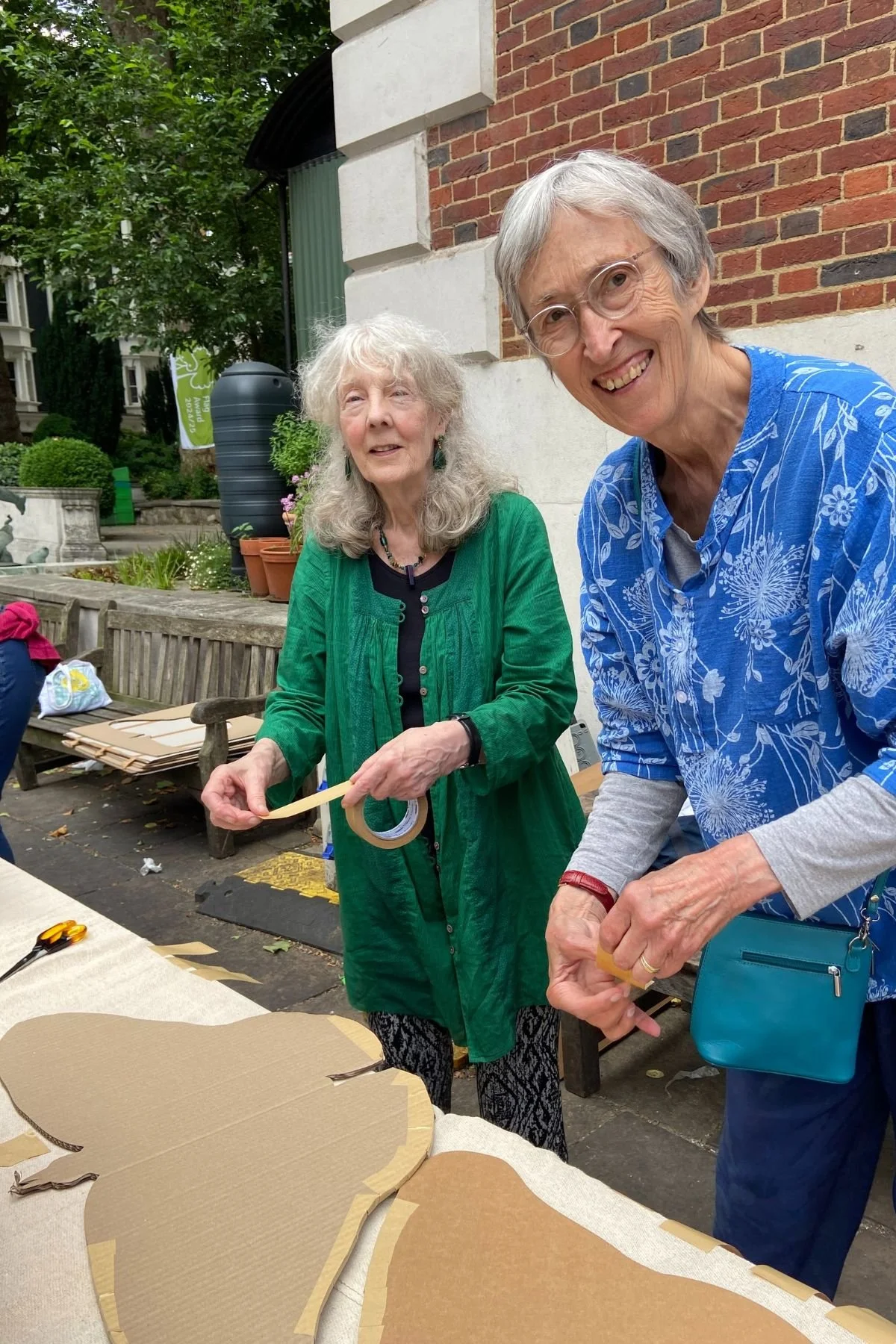
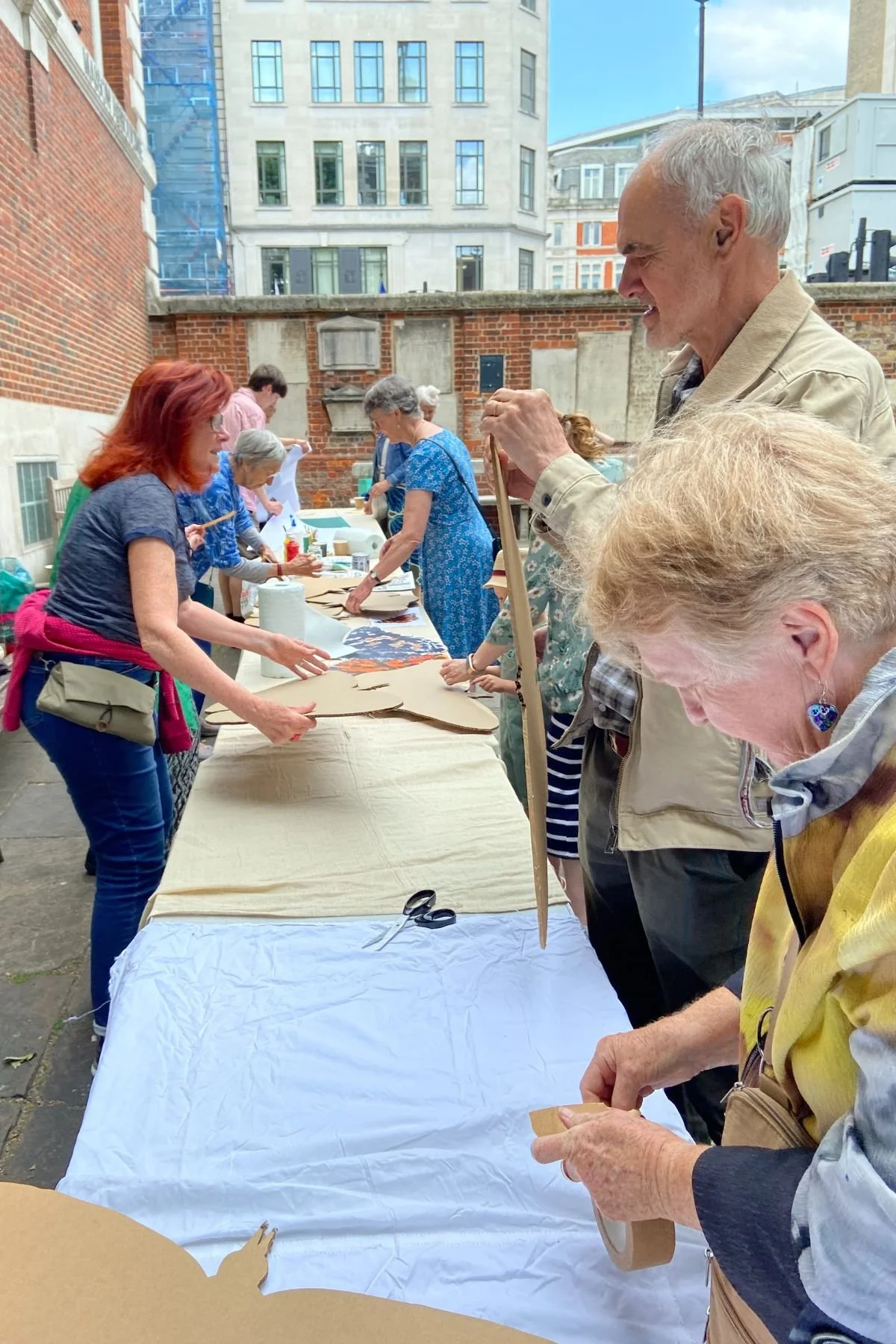
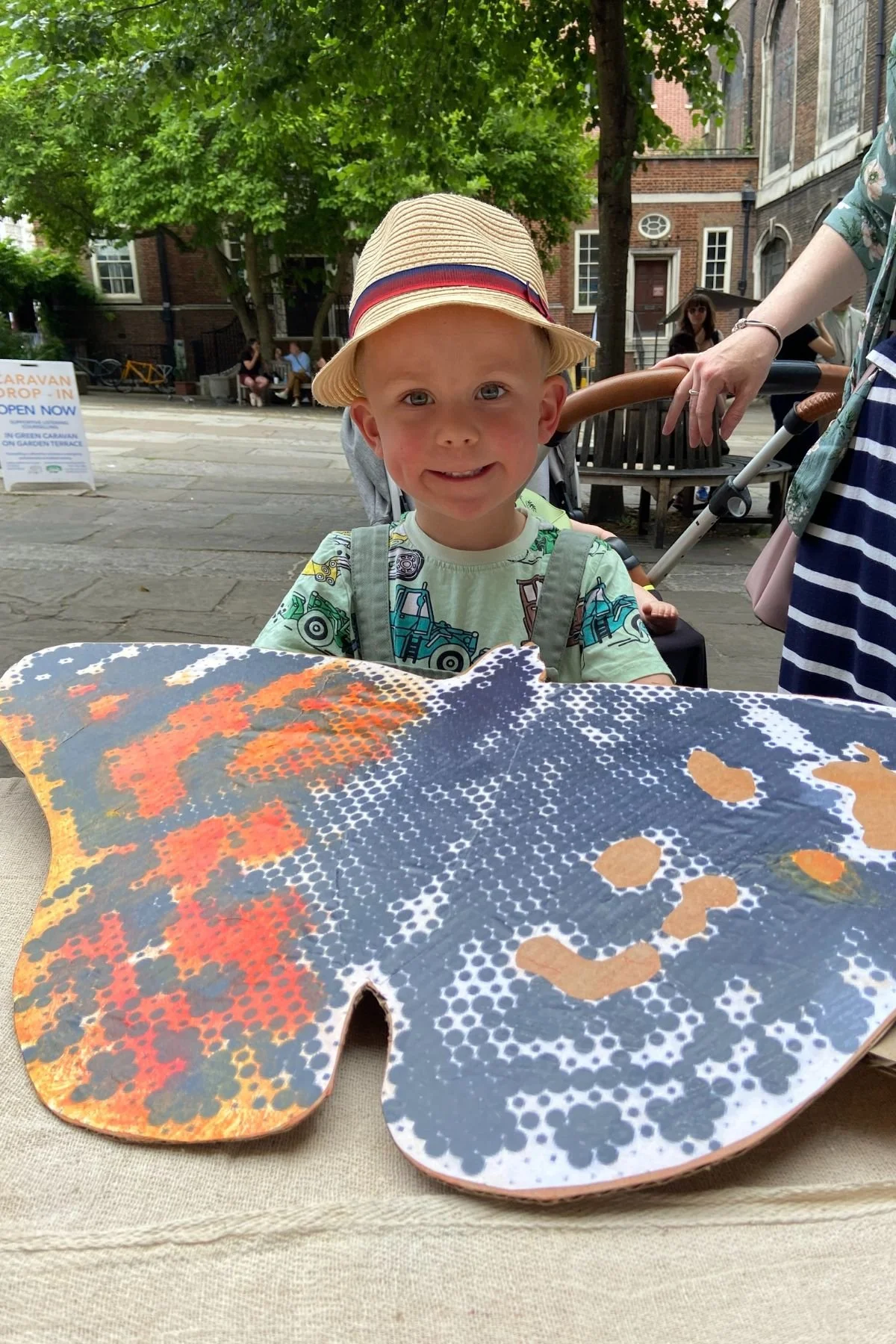
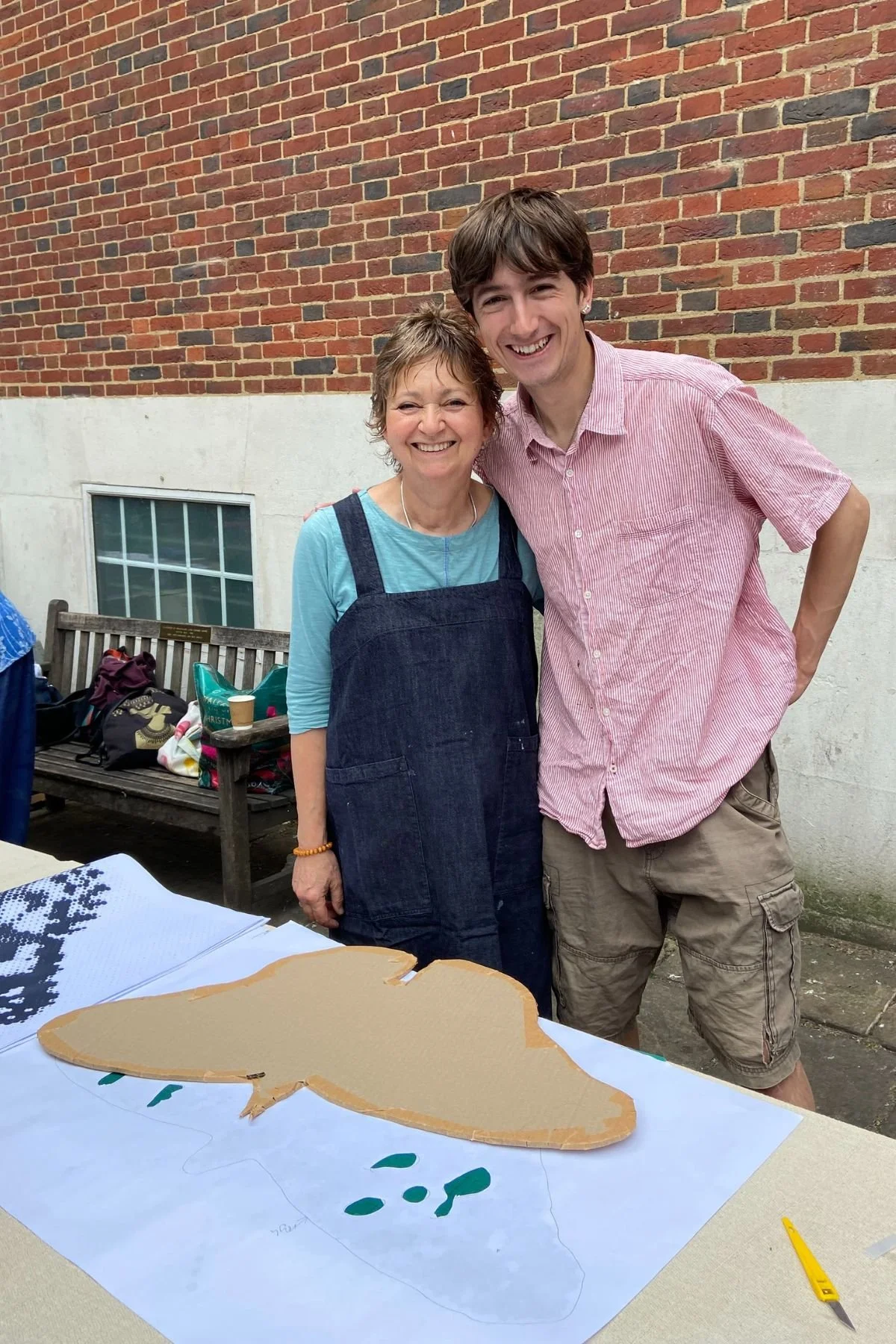
We invited the members of St James’ Congregation to join us making butterflies on a beautiful sunny summer afternoon. Quite a few visitors and passers-by joined in too!
Our Finished Butterflies
Butterfly by Diane Pacitti
Swarmed power swept by a fierce tail-wind
high over chimneys, in flight
from poison-fume
smoke-gloom
that pinned
to starving death
these beings winged with light
who now break free and whirl above the earth
A miracle was present in their making:
egg, furry crawling larva, sheath.
When were they birthed?
Or we?
To not-be
pulped catafly
pent inside a chrysalis, breaking
out with damp and scarcely-quivering wings
We look for them in summer, never dreaming
these gleaming peacock-flies, so light-
weight, so frail
could sail
at such a height
nine thousand miles, with rests
to feed, breed; each generation streaming
closer towards home, towards their own land-nest
Explore more from Breathe Project
Collaborate With Us
We're always open to new ideas and creative partnerships that bring multiple perspectives into focus in the service of Earth Justice. Please get in touch.
Explore Our Projects
Explore our evolving archive of multi-disciplinary, collaborative projects. We value art, poetry, science, faith, history, community engagement and more, and the creative spaces that open up between them.