Breathe
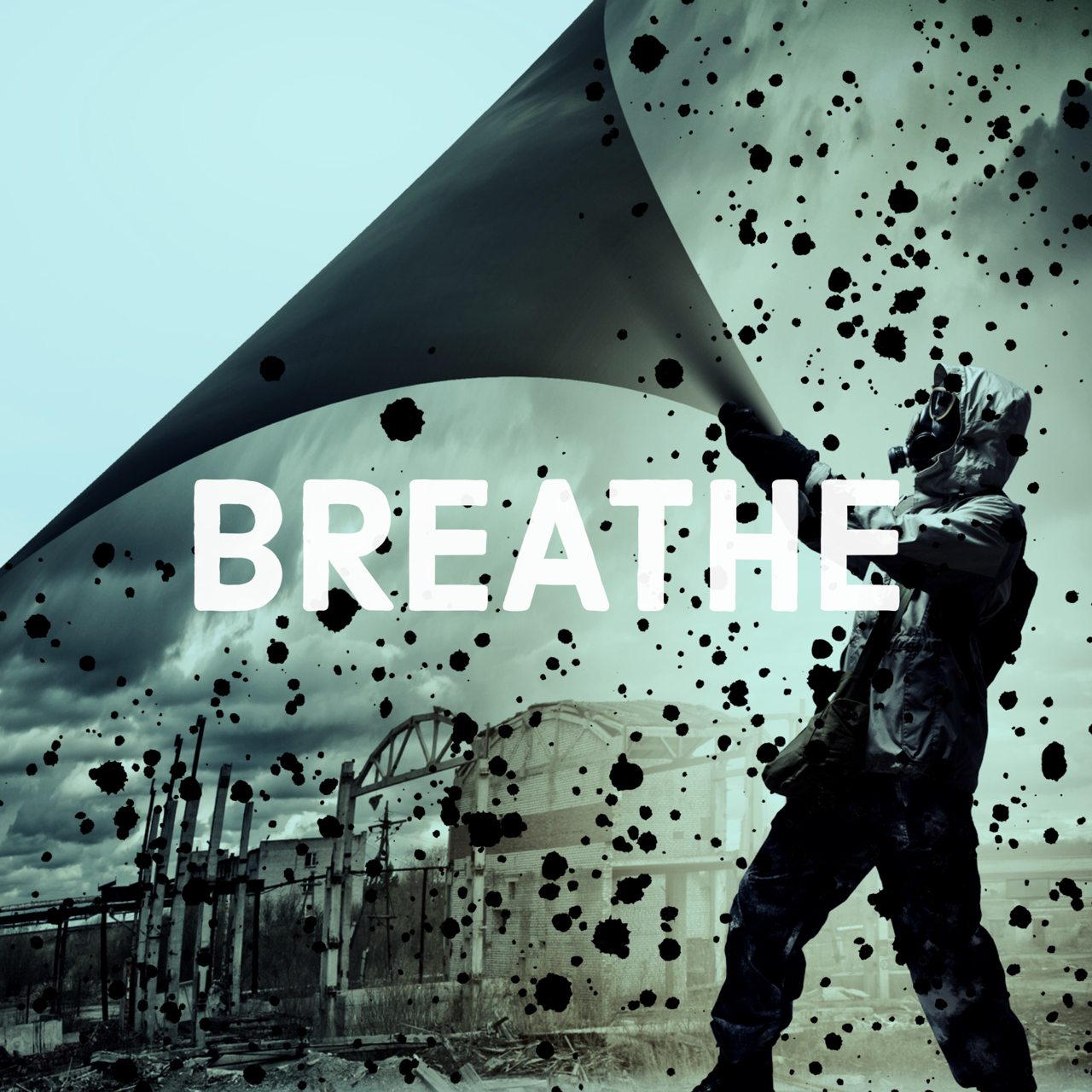
‘Breathe’ is our 2025/26 interdisciplinary project, bringing together insights from faith, art, science, and poetry, exploring and honouring the air and breath that sustain us.
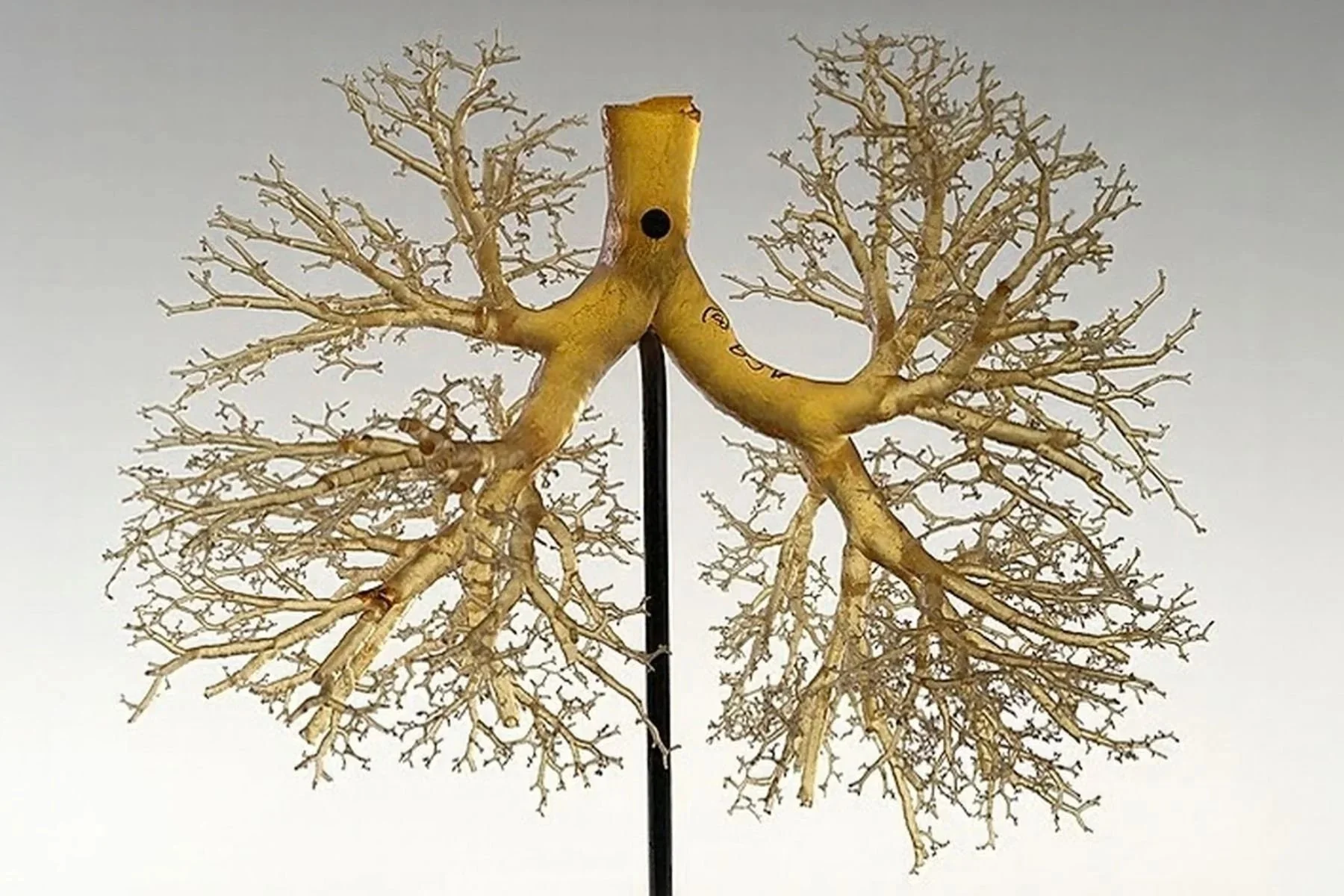
Air provides our most constant and intimate connection with the world around us. We swim in it, like fish in water, our lungs never ceasing their rhythmic swell and relax, 12 to 20 times every minute of our lives. Like those fish filtering water across their gills, we also interact with whatever is in that half-litre of air inspired with every breath.
As a global society, we treat our shared air-ocean like an open sewer, filling it with gases, aerosols and particles. It seems that we pay less attention to this behaviour than we do to contamination of water and land which is perhaps more visible to us, because just slightly further removed. Perhaps we think air pollution will ‘blow away’ – wherever ‘away’ might be.
Airborne Particulate Monitoring
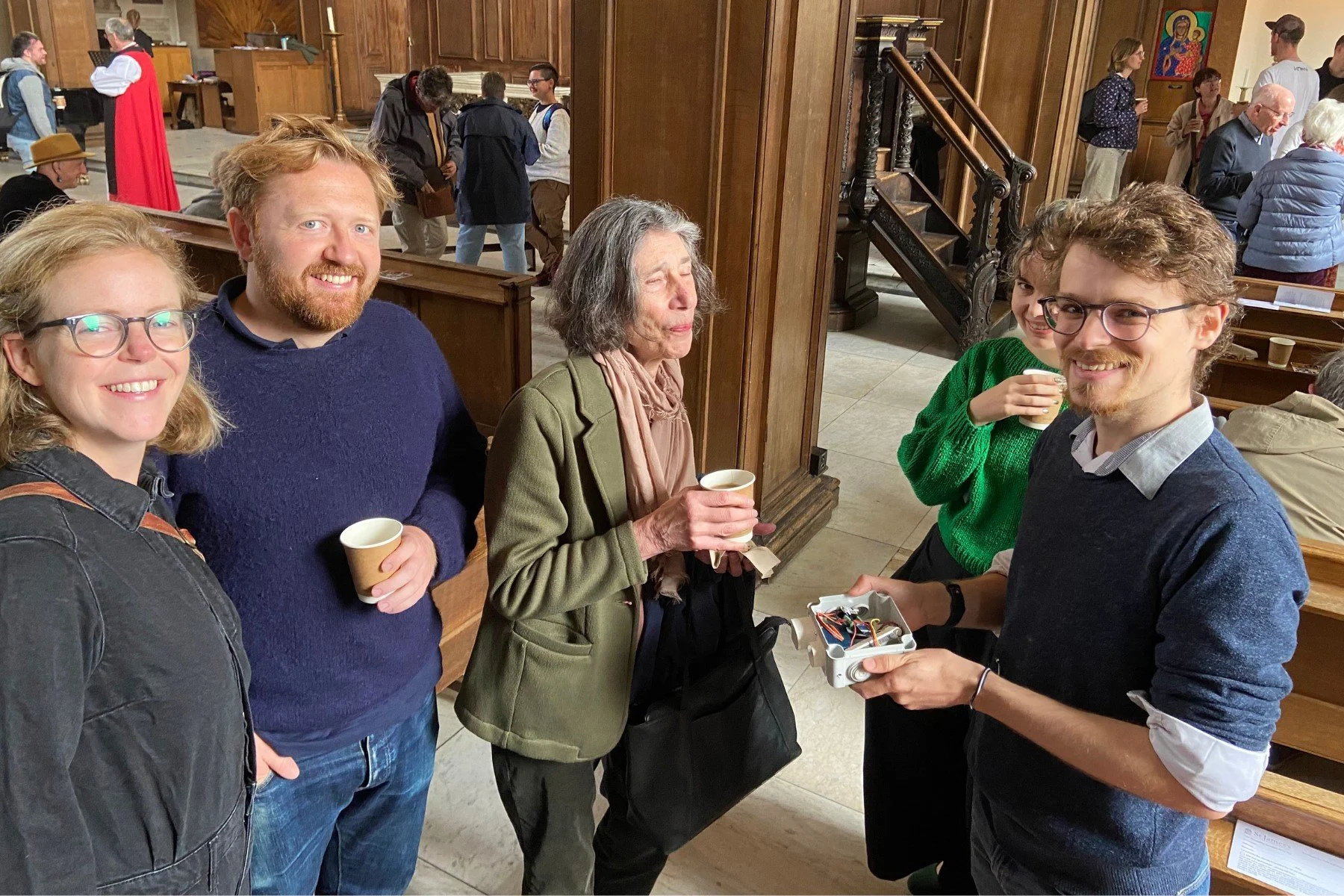
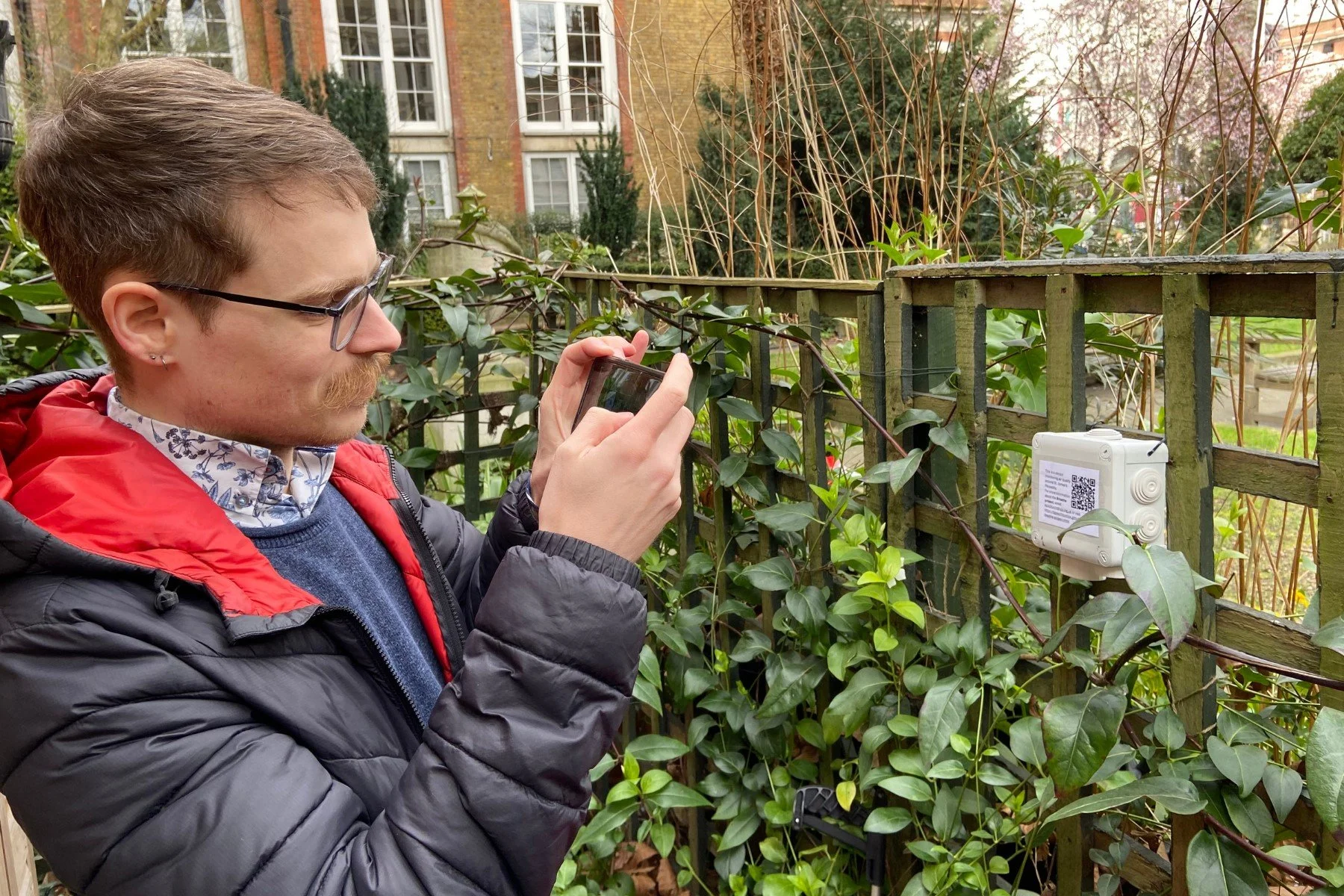
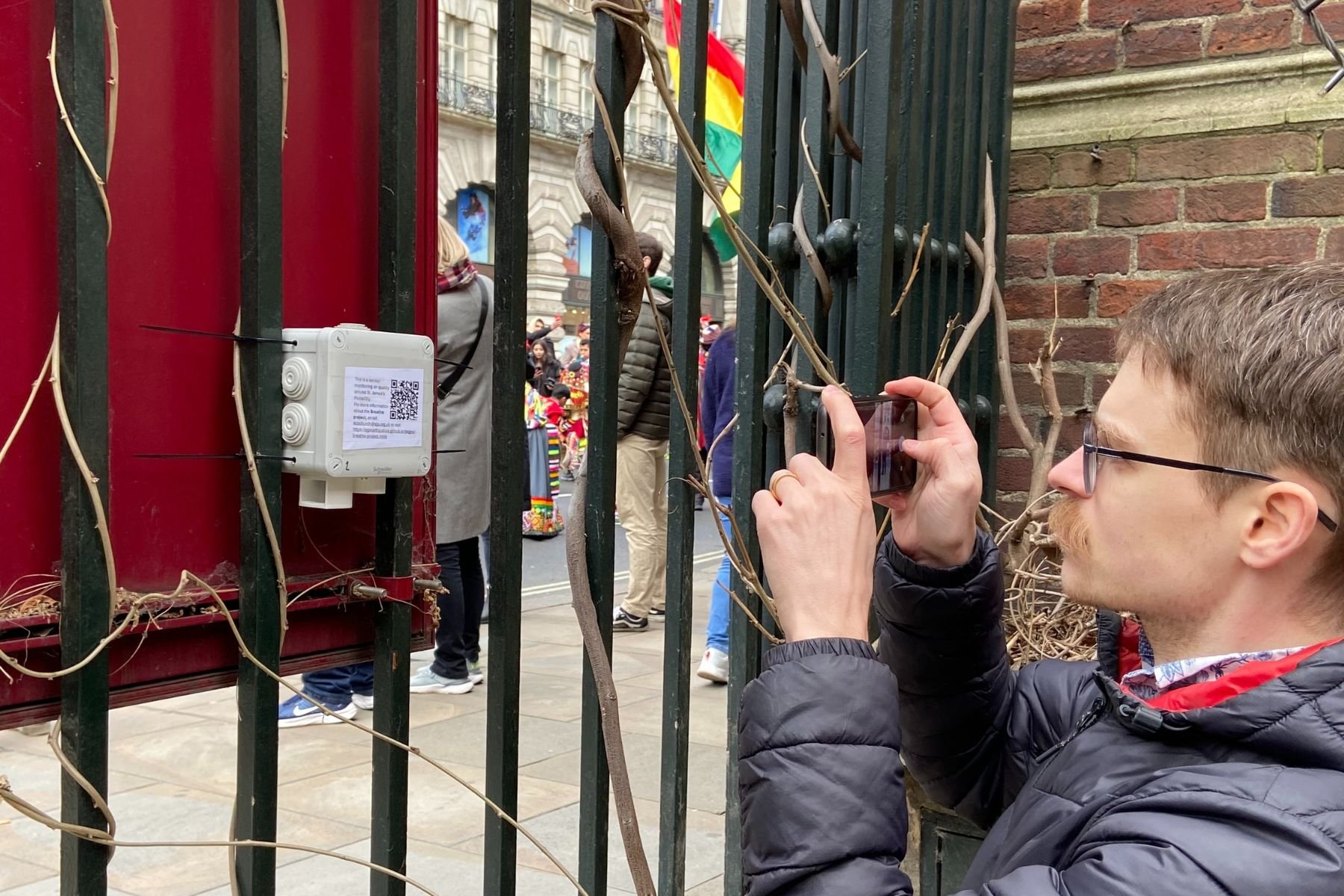
Our starting point for this project was measuring air-borne particulates around the St James’s site in Piccadilly. We have home-made sensors – an inspiring story in itself – installed in the church, the rectory, the garden and on the Piccadilly railings. These were made by Jonathan Sutton - Smutná, a member of our community and PhD Student at King's College London. We will analyse this data across the year, and use it as a jumping off point for reflections, liturgies, artwork and raising awareness.
Making the Data Sing
Gathering almost 2 years of data has focussed our minds on the quality of air we are breathing in and around the church, and generated questions around ways of presenting data that help people engage with it. This is sometimes called defamiliarisation and can help us look with new eyes and ears.
Jonathan and Jana Sutton - Smutná have been playing with some creative interpretations of the data that we have collected.
Eco-Contemplative Liturgies
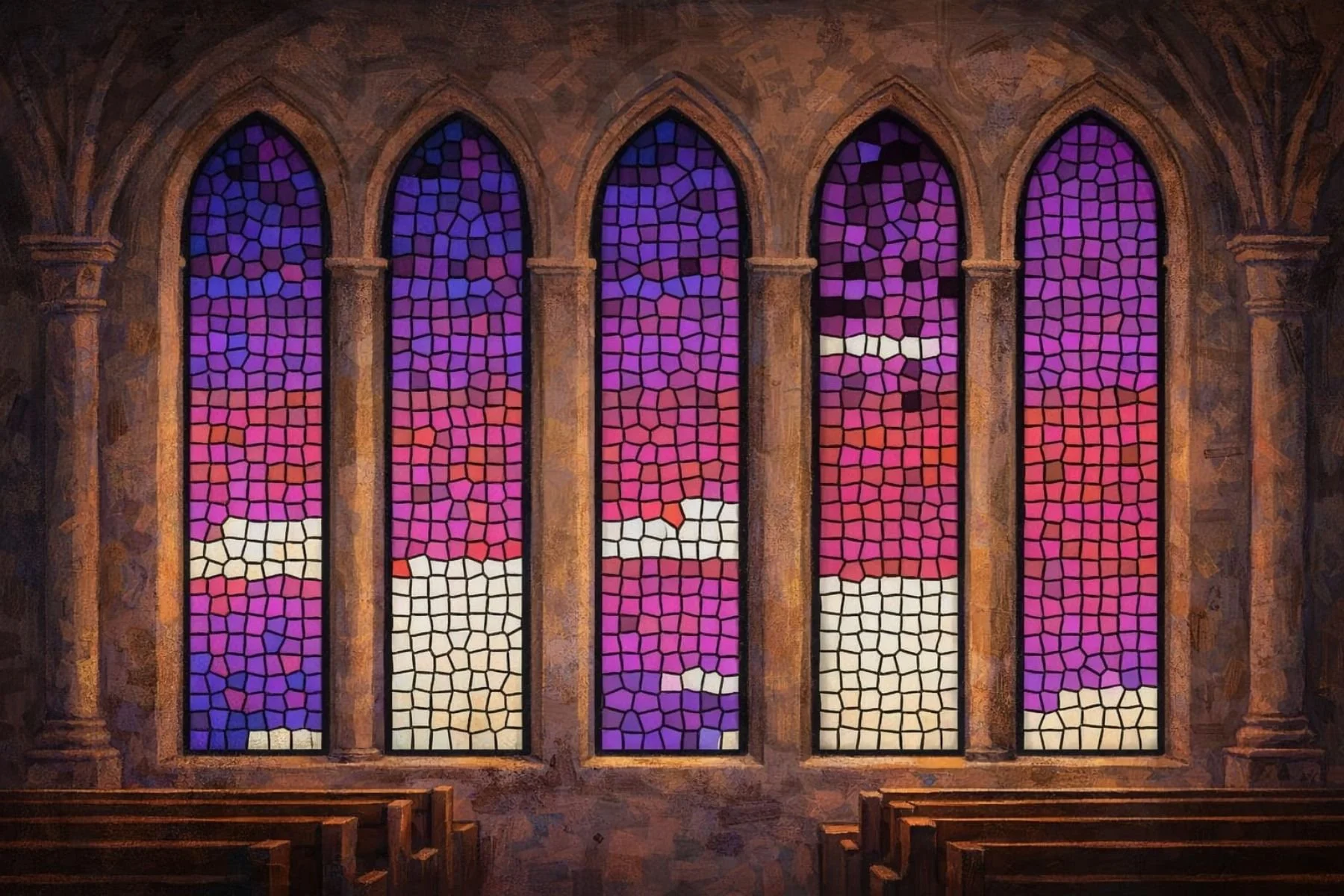
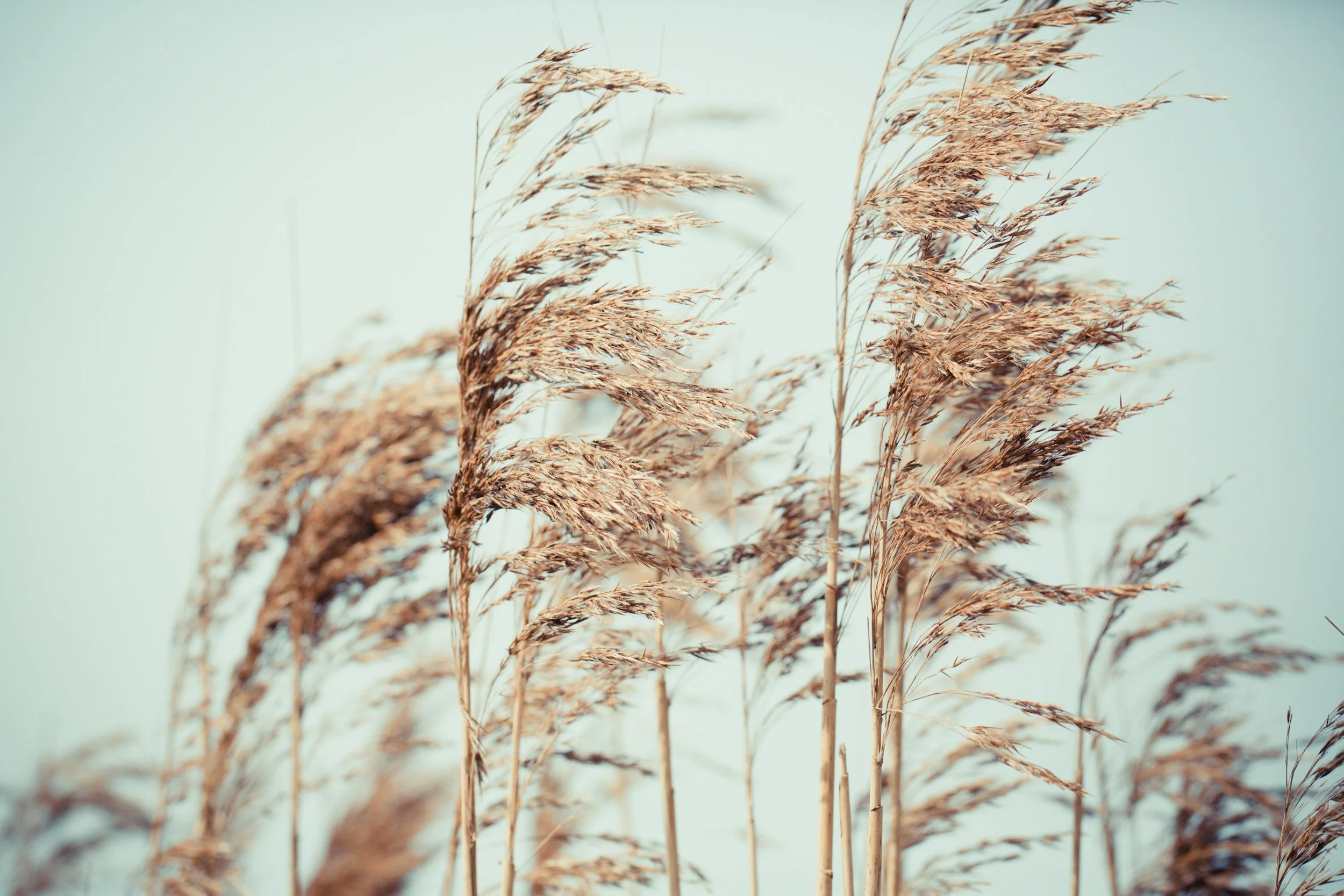
Eco-contemplative liturgies are our outdoor services held monthly at St James’s Piccadilly and online. We contemplate, pray and share together, immersed in the beauty of the natural world. Two of our recent Liturgies have focused on air, wind and breath.
Air is an Earth Justice Matter
Air is fundamental to all life on planet earth, a sacred gift freely imparted. The right to breathe safe air is now recognised by the UN Security Council. But it has become increasingly threatened in the current Anthropocene epoch, now well advanced, which has brought pollution and climate breakdown to levels that endanger the health and well-being of the entire ecosystem.
The World Health Organisation assesses that almost the entire global population (99%) breathes air that exceeds safe air quality limits.
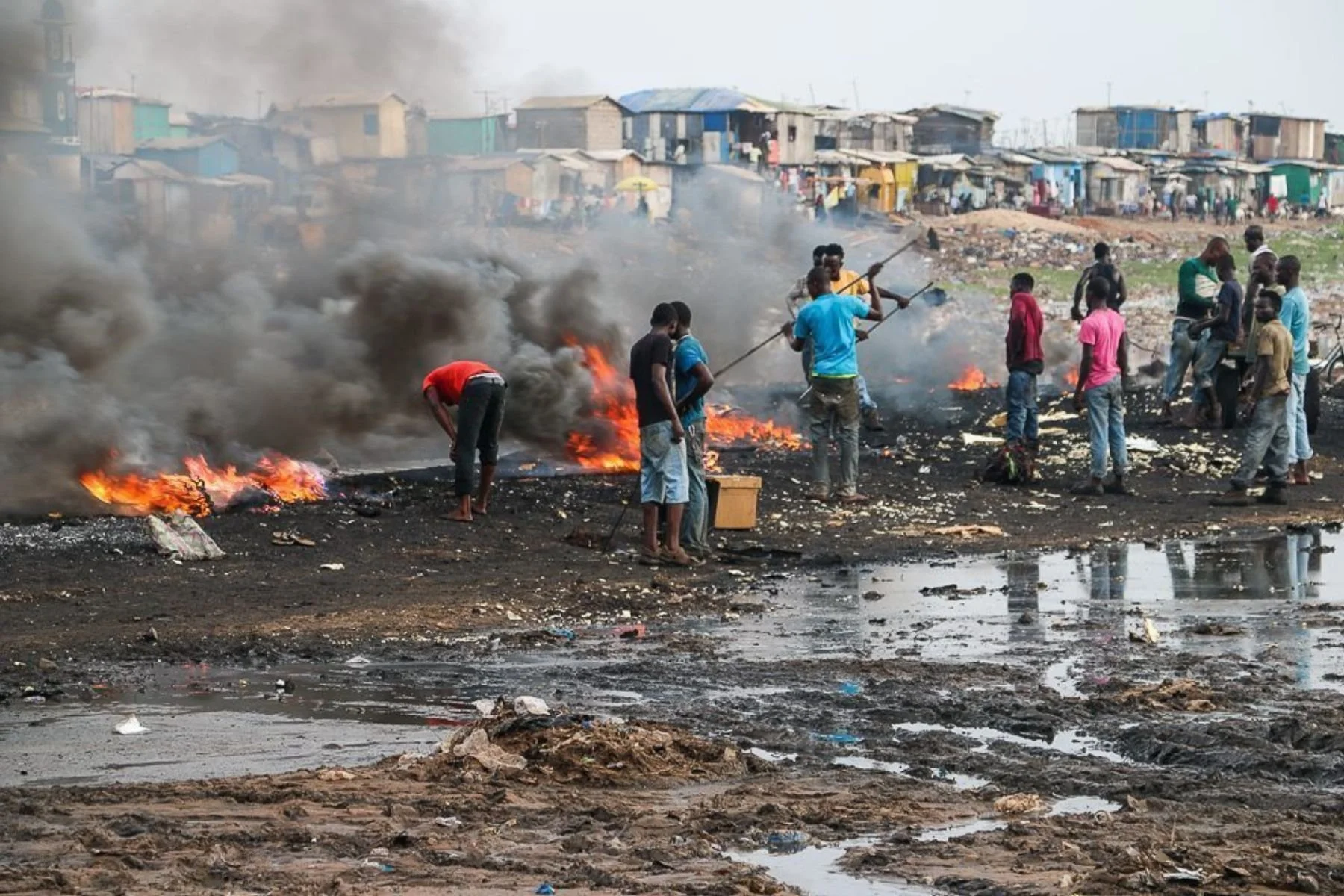
Agbogbloshie Waste dumping and burning site in Accra, Ghana. Credit: Fairphone.
Pentecost
At Pentecost, we reflect on the symbolism of air and wind, starting with our most intimate physical engagement with the air - breath. At Pentecost, the Holy Spirit arrives like the sound of a mighty wind blowing through the locked room. Breath, the Holy Spirit, and pneuma - the ancient Greek word meaning both ‘spirit’ and ‘breath’ - are deeply interconnected, symbolizing life, presence, and divine inspiration.
The Holy Spirit is symbolised as wind or breath of God, or described as hovering over the waters, evoking images of protection and nurture, brooding like a parent bird over precious eggs. Across spiritual traditions, breath serves as a gateway, an invisible thread, bearing witness to the vital presence of Spirit. Breath is the bridge between matter and mystery—an elemental reminder that the sacred dwells within and around us, in every inhalation. When we breathe, we draw in more than air; we are in communion; receiving a touch of the sacred.
Air quality, then, is both a matter of physical health and a spiritual concern. Polluted air physically disrupts sacred connection, harming and killing. All over the planet, life is crying out ‘I can’t breathe’, suffocated and poisoned by the effects of human activity. Clean air is a reverence, a way of honouring the divine that moves within and through us. To breathe freely is to remember: the holy is not distant, but close as breath, invisible as wind, present in every inhale, every exhale. When breath is compromised, so is our access to Spirit, intuition, and balance. In honouring clean air, we honour the Divine, and life itself.
“And suddenly there came from heaven a sound like a mighty rushing wind.” Acts 2:2
SWARM
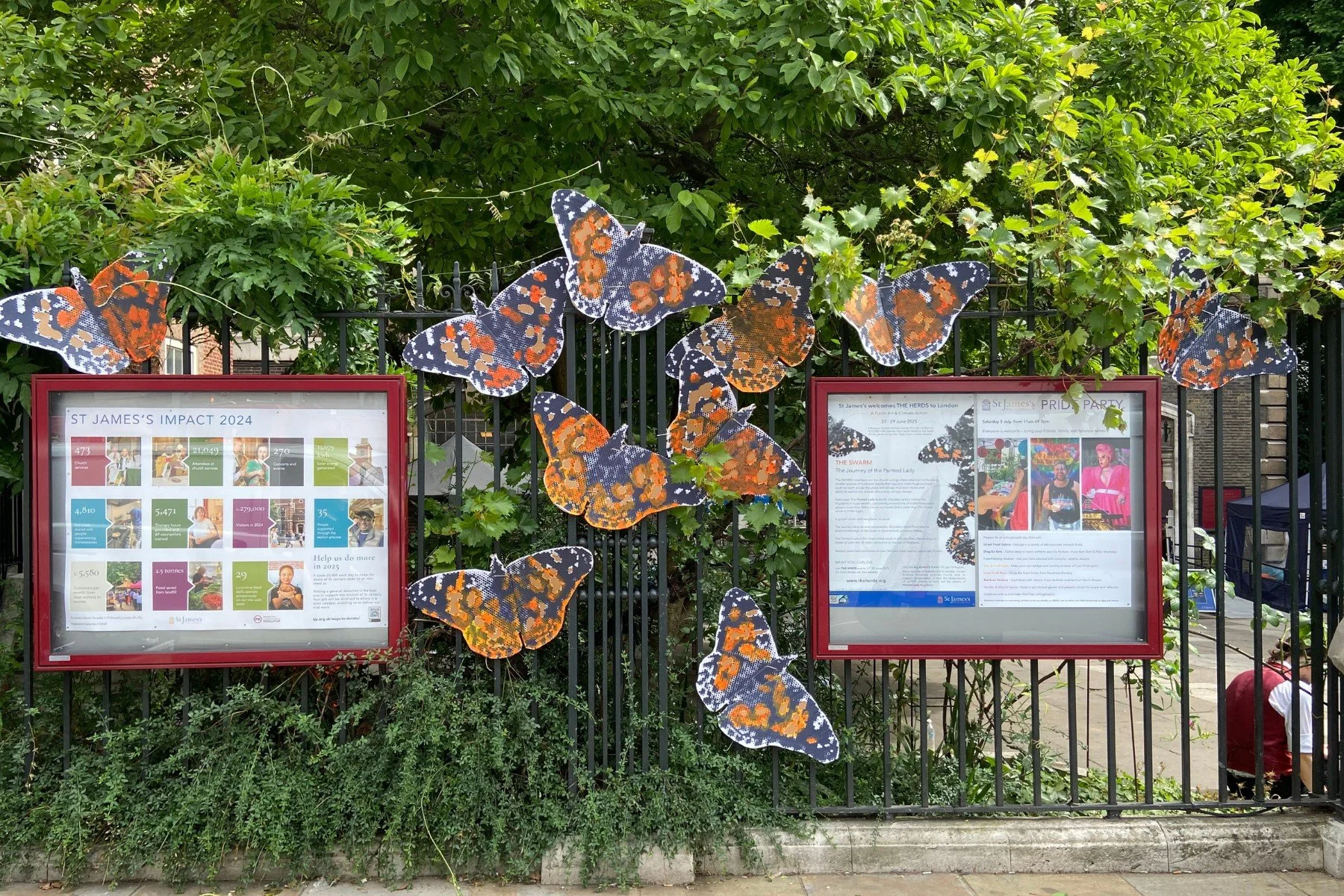
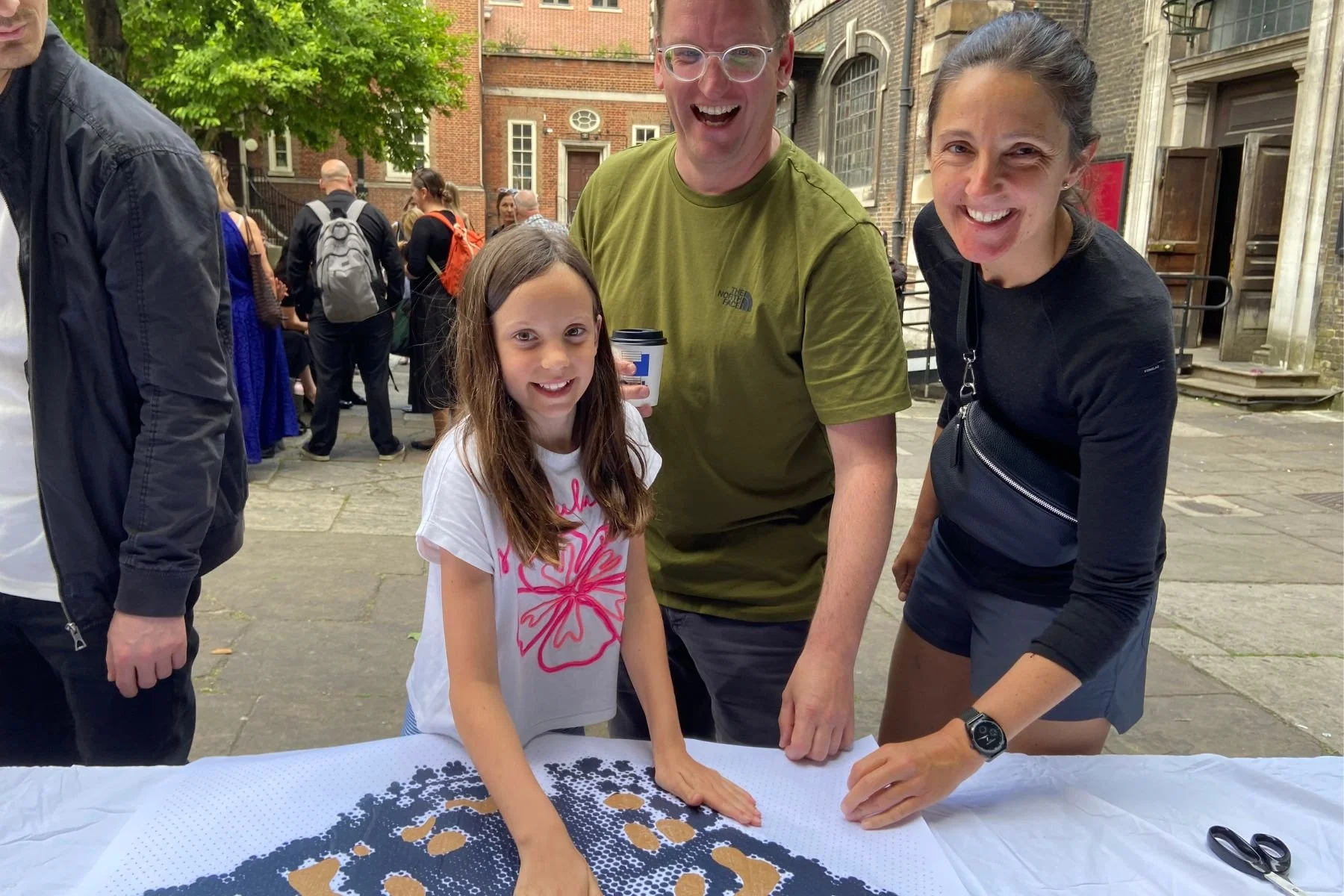
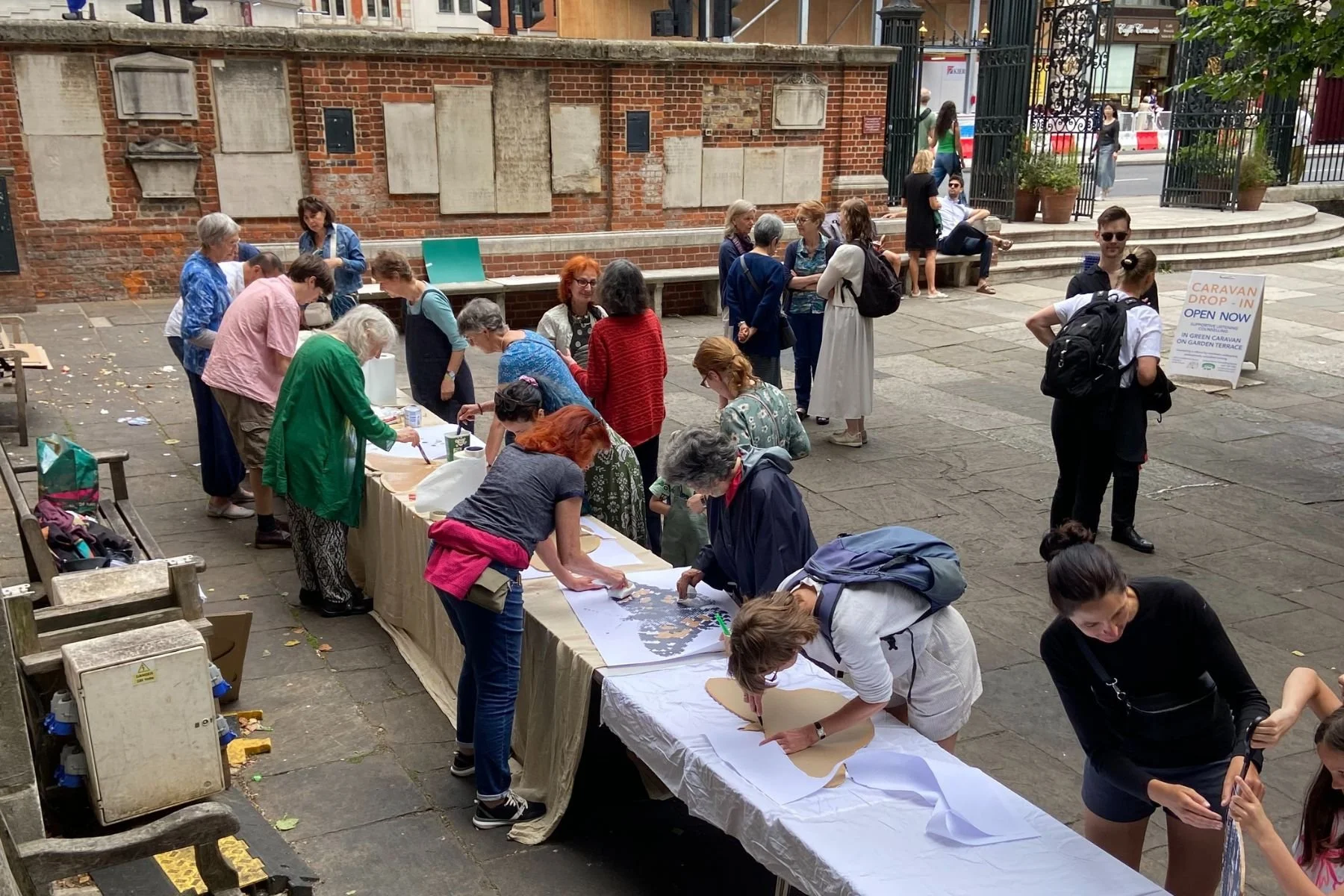
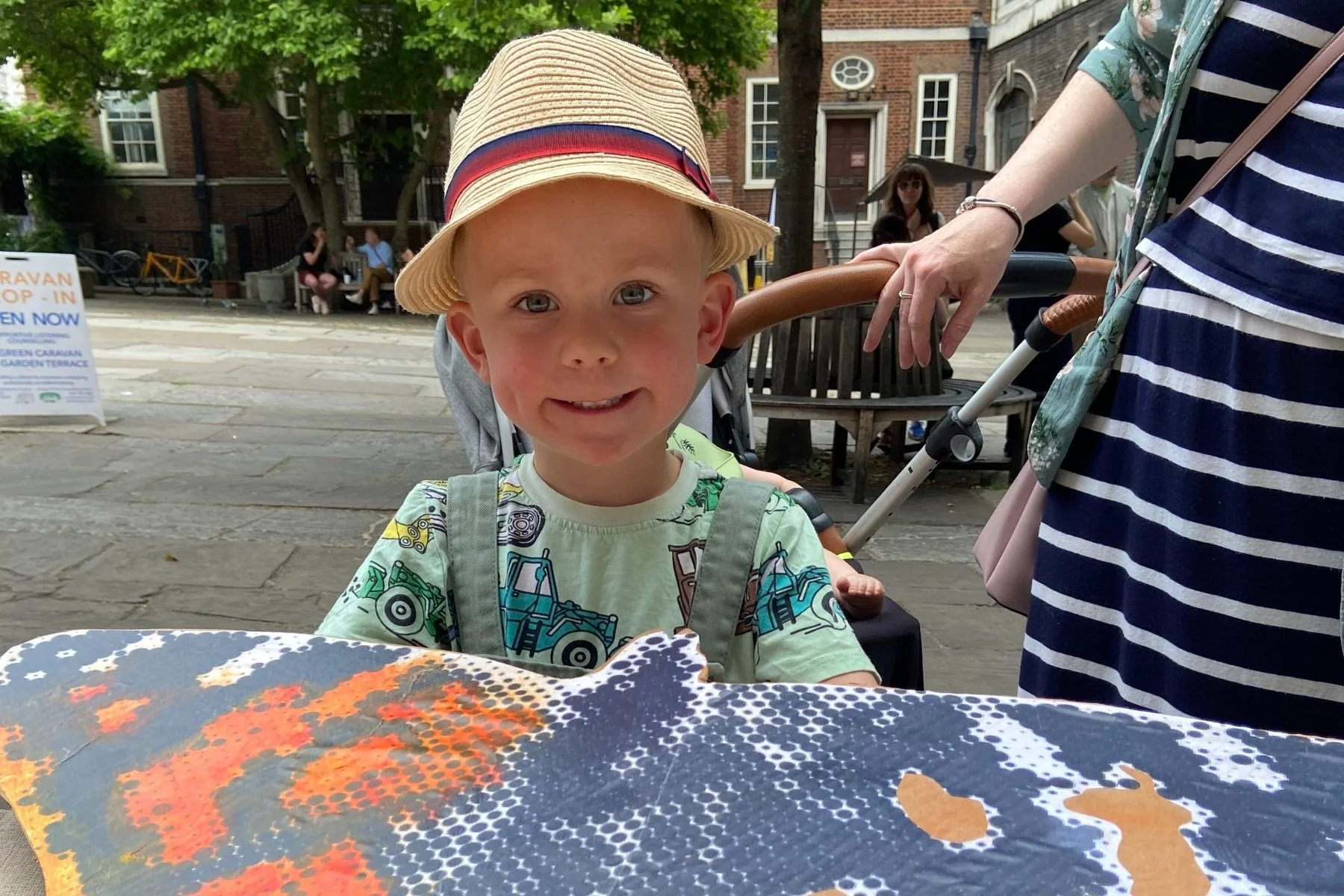
SWARM is a response to the HERDS project which visited London in July 2025.
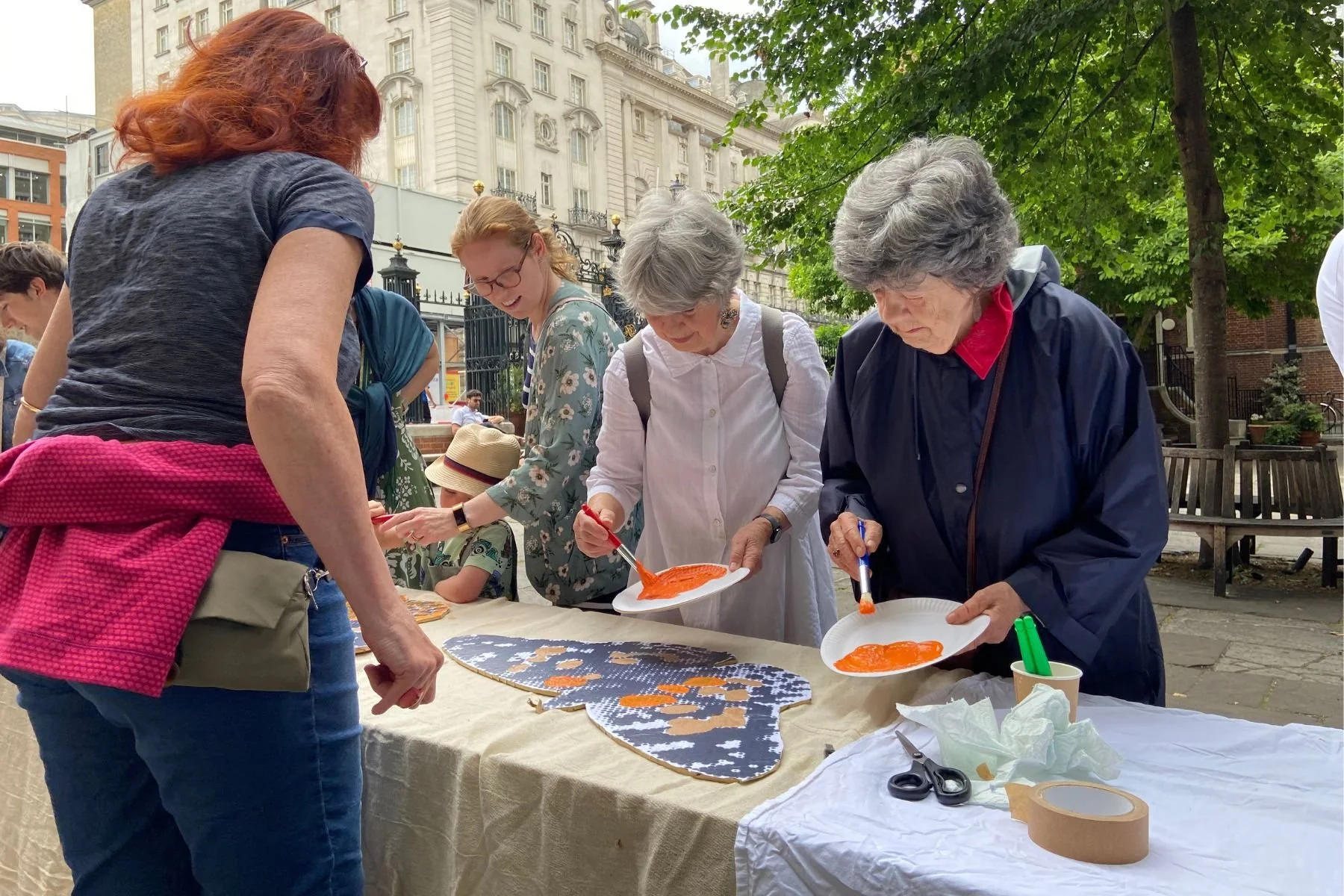
The SWARM installation on the church railings draws attention to the many smaller species of birds and insects that regularly make huge journeys, South to North, across the globe and the migration routes of which, and ability to survive, are already affected by climate change. Every year, the Painted Lady butterfly (Vanessa cardui) makes this migration in huge swarms, completing a round trip of 9,000 miles each season, more than 500m above our heads (that’s taller than the Shard which is 310m high).
A global citizen and neighbour to us all.
Collaborate With Us
We're always open to new ideas and creative partnerships that bring multiple perspectives into focus in the service of Earth Justice. Please get in touch.
Explore Our Projects
Explore our evolving archive of multi-disciplinary, collaborative projects. We value art, poetry, science, faith, history, community engagement and more, and the creative spaces that open up between them.