
The Three Sisters: A Mutual thriving
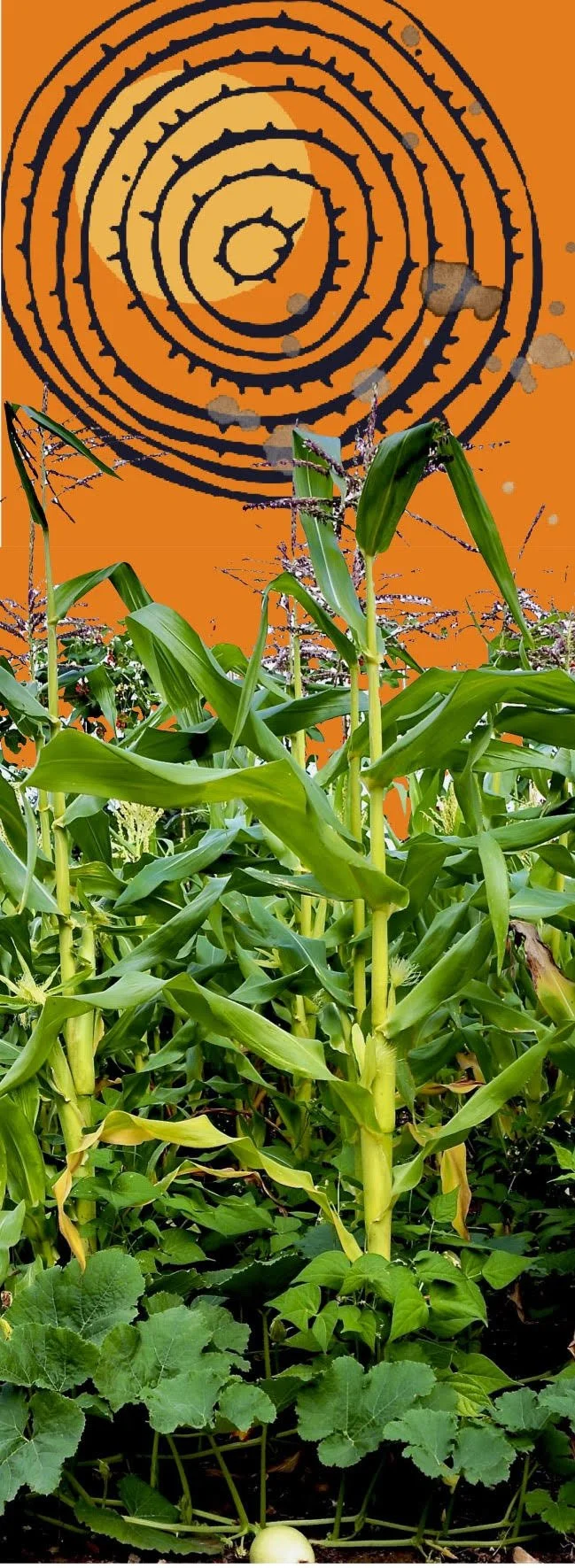
Joan Ishibashi shares the importance of the Three Sisters in American farming and food – maize, beans and squash.
Growing up with the Three Sisters
I grew up in a predominantly Mexican-American community in the Los Angeles area. Nearly every week in the school cafeteria until we graduated secondary school, we saw refried beans plopped onto our food tray. We loved the tacos or enchiladas which came as the main course. In the morning before heading out the door for school, I often had fresh corn tortillas for breakfast, along with my hot cocoa. After school I snacked on taquitos and guacamole. Corn and beans were ever present.
My parents grew up in Japan, so our home was embedded in Japanese culture. But we loved to exchange food and song with our Mexican neighbours. At Christmas and New Years, we swapped sushi for tamales and salsa, our traditional holiday fare. It wasn’t until I went to university that I found out other Americans from European backgrounds eat turkey and roast beef for the holidays.
In a bit of fusion, my mother would serve tamales with rice and soy sauce on her beautiful Japanese dishes, and we would eat with chopsticks.
I was vaguely aware of the agricultural Three Sisters, but it took coming to London and St. James’s Piccadilly to learn more about these staple foods. I realised that as a Pacific Southwest American, the Three Sisters have always been a prominent part of my life.
Over 90% of the Mexican community has Indigenous roots, and it can be seen in the simplest of ways in the food. I still crave the fresh corn tortillas that I have eaten since my youth. A meal of refried pinto beans (the most commonly consumed bean in the United States) and a stack of tortillas provides complete protein as well as antioxidants, vitamins and minerals. I didn’t know this before; I only knew that these two dishes along with some fresh pico de gallo were enough to make me a happy and contented diner.
The coming of autumn always brings out massive quantities of squash of all different varieties, shapes and sizes in the grocery stores. Piles and piles of squash and gourds. Fields full of pumpkins are a common sight. Households who have artistic inhabitants will dazzle with displays of these gourds to celebrate autumn. And the food preparation…baked squash, pumpkin pie, pumpkin bread, pumpkin latte, pumpkin soup, pumpkin cheesecake, yes, pumpkin, is a favourite squash sister.
Learning from Indigenous Communities
To many of North America’s First Nations, particularly the Haudenosaunee (Iroquois) and Lenape people, whose land includes present-day New York City, these three plants were a sacred gift that provided physical and spiritual sustenance. In this ancient system of companion planting; maize plants offer support, beans provide nitrogen and the twining squash knits the system together, providing shade and retaining moisture.
Our current, so-called modern methods of agriculture encourage planting one crop in massive fields, including the Three Sisters, to the detriment of the soil and water table. I have a picture of me standing in a field of corn that is being grown for cattle feed (see below). Something is out of kilter here, entire swaths of the United States planted with crops to feed cattle, seems like a waste of resources. The corn is a delicious and versatile food that can feed so many people directly. The Indigenous communities took a symbiotic approach to planting these basic food crops, cultivation that developed over many years. We could learn something from them.
The Three Sisters also had a important spiritual role too. The Hopi people used corn in ceremonies, placing blue corn in a framework of directional associations in which yellow corn was associated with the Northwest; blue corn with the Southwest; red corn with the Southeast; white corn with the Northeast; black corn with the Above, and all-coloured corn with the Below.

Joan in the middle of a endless field of maize.
Native American Farming Practices
Native Americans began farming in what is now present-day Illinois around 7,000 years ago. Native women, generally oversaw land-ownership and cultivation, were responsible for selecting seeds for desirable traits, maintaining species purity by planting different seeds sufficiently far apart to prevent cross-pollination.
Natives in the British Columbia regions practiced a sophisticated permaculture, using over 250 species of plants for food, tea, fuel, construction, fibre, canoes, dye and glue. As part of the permaculture and to discourage the transit of pests from one plant to another, Natives ‘segregated’ similar vegetable species.
Natives could support roughly three times as many people per acre than ‘modern’ European farmers. For example, corn-farming Indians in the New York State region were more productive than their European wheat-farming counterparts. Because the Indigenous Peoples did not use ploughs, their soils were healthier, more biologically diverse. Plowing causes soil degradation.
A Wonderful Three Sisters Lunch
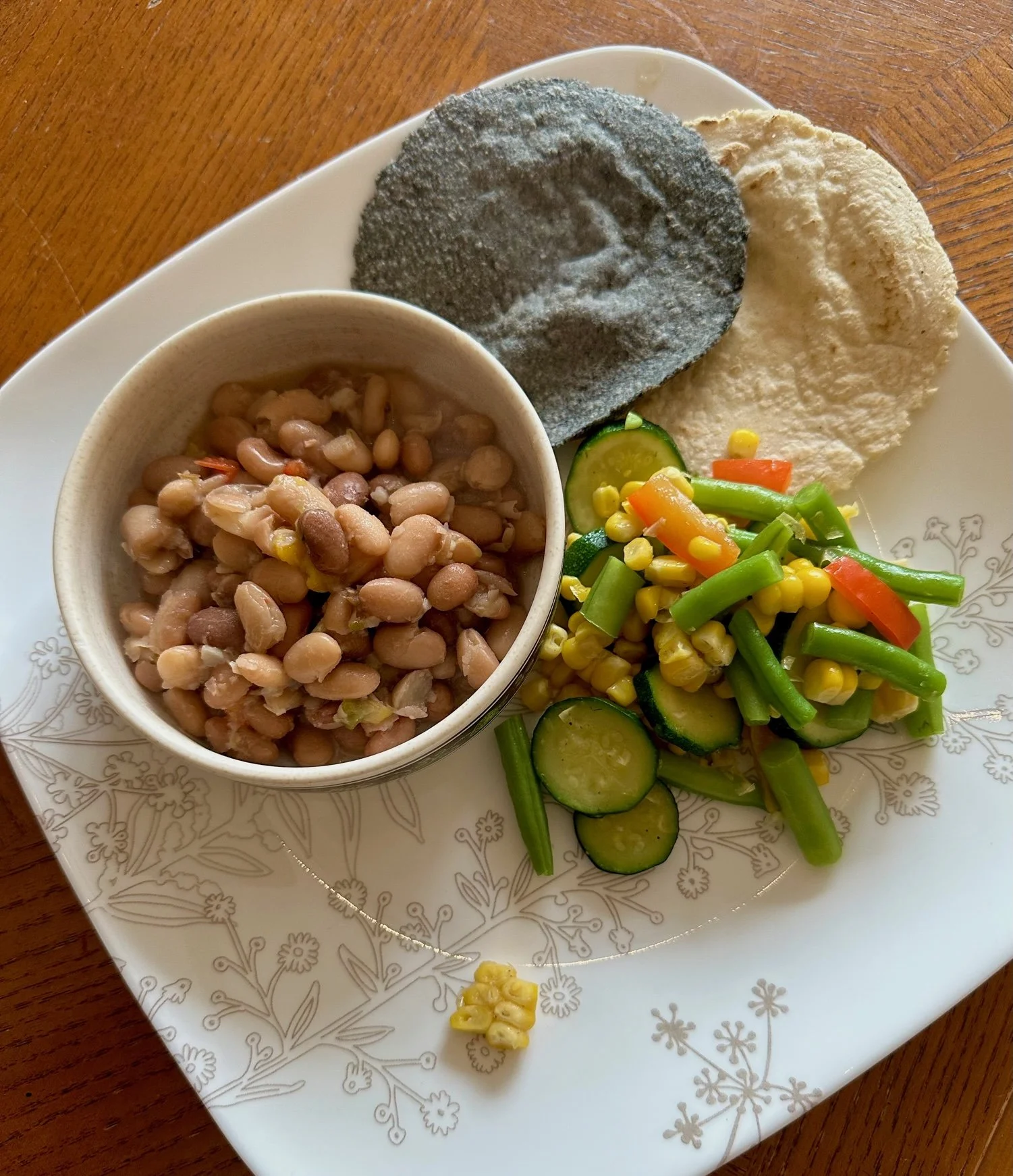
After a recent trip to Wolf Fields community nature reserve, we shared a to a delicious home-made lunch of Pinto Beans, Three-Sisters Salad and home-made white and blue corn-tortillas, expertly prepared by Joan Ishibashi.
Blue Corn was originally from Mexico and was grown by the Hopi people, it has a higher protein content than yellow corn and also has a lower starch content.
Explore More from ‘Food for the Ecozoic’ Project
Collaborate With Us
We're always open to new ideas and creative partnerships that bring multiple perspectives into focus in the service of Earth Justice. Please get in touch.
Explore Our Projects
Explore our evolving archive of multi-disciplinary, collaborative projects. We value art, poetry, science, faith, history, community engagement and more, and the creative spaces that open up between them.