
Food for the Ecozoic
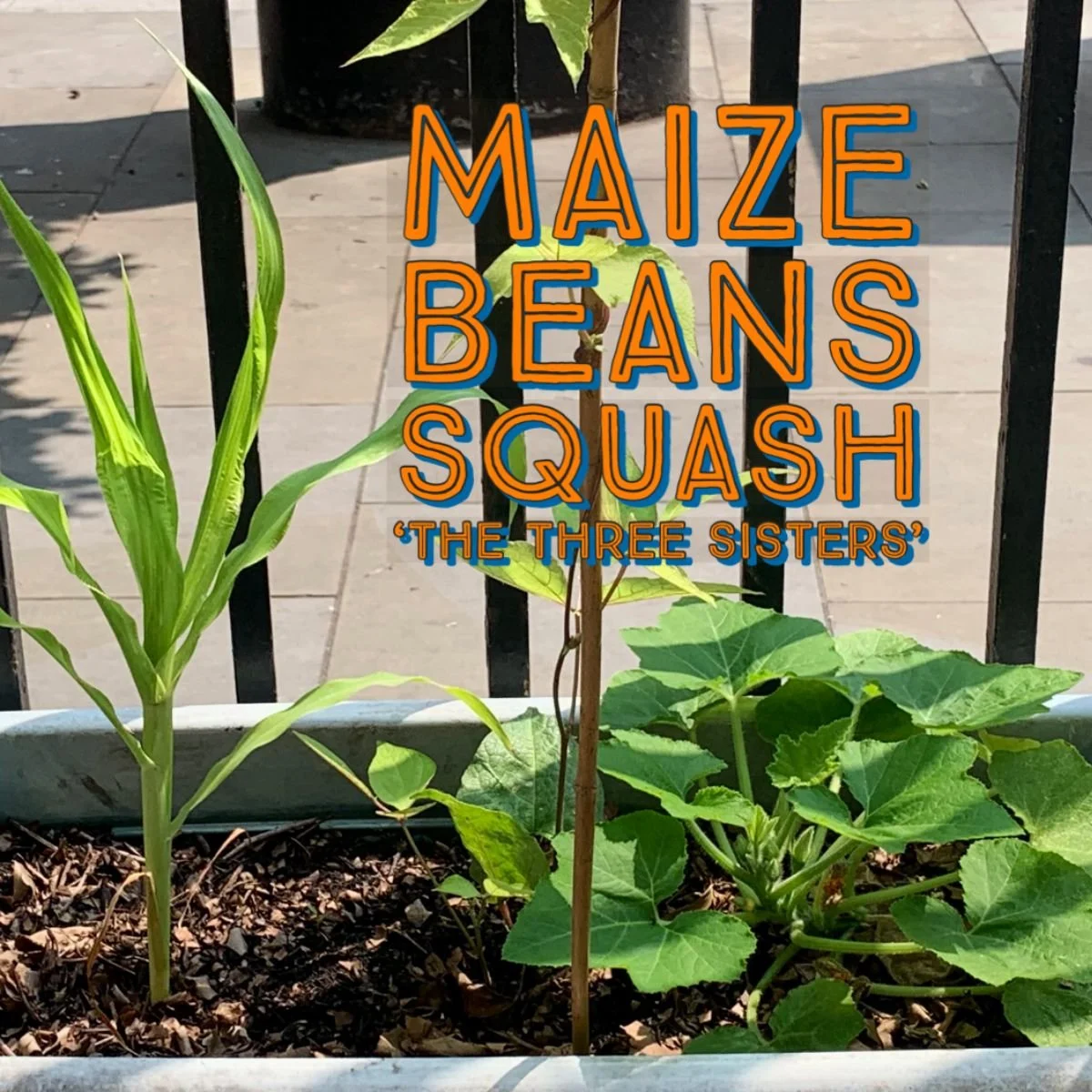
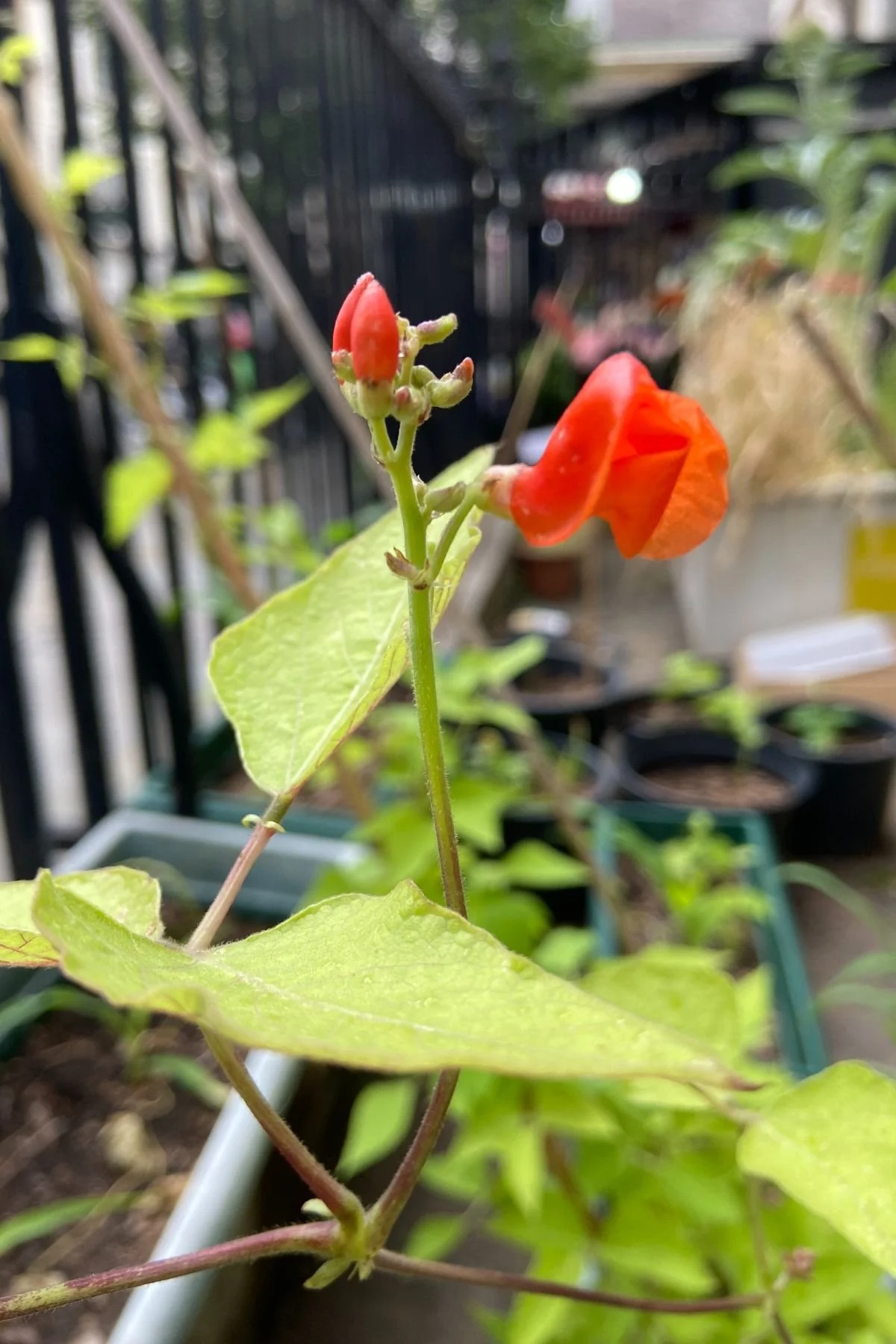
In 2023 the south-facing, sun-drenched curtilage of the church became a new Growing Space, soon known as the Ecozoic Garden, and featuring the Three Sisters (corn, beans and squash) growing on the railings. Many cultures have a version of this staple food combination, which sustainably provides carbohydrates, protein and vitamins/minerals.
How can we begin to repair the damage done to our food system by industrial agriculture?
What will we grow and eat in the climate-changed future?
What wisdom will help us return to a gentler, more relational way of being with other species?
What does “Ecozoic” mean?
The word Ecozoic was coined by Thomas Berry last century. Berry, who described himself as a ‘geologian’, lived a deeply earthed Christianity, calling for a unified sense of the sacred community of life. The word Ecozoic literally means ‘a home for life’ (all life) and Berry envisioned a new geological era characterised by a transition away from our current destructive industrial civilisation towards a mutually life-giving human presence for planet earth.
Thinking in Geological Time
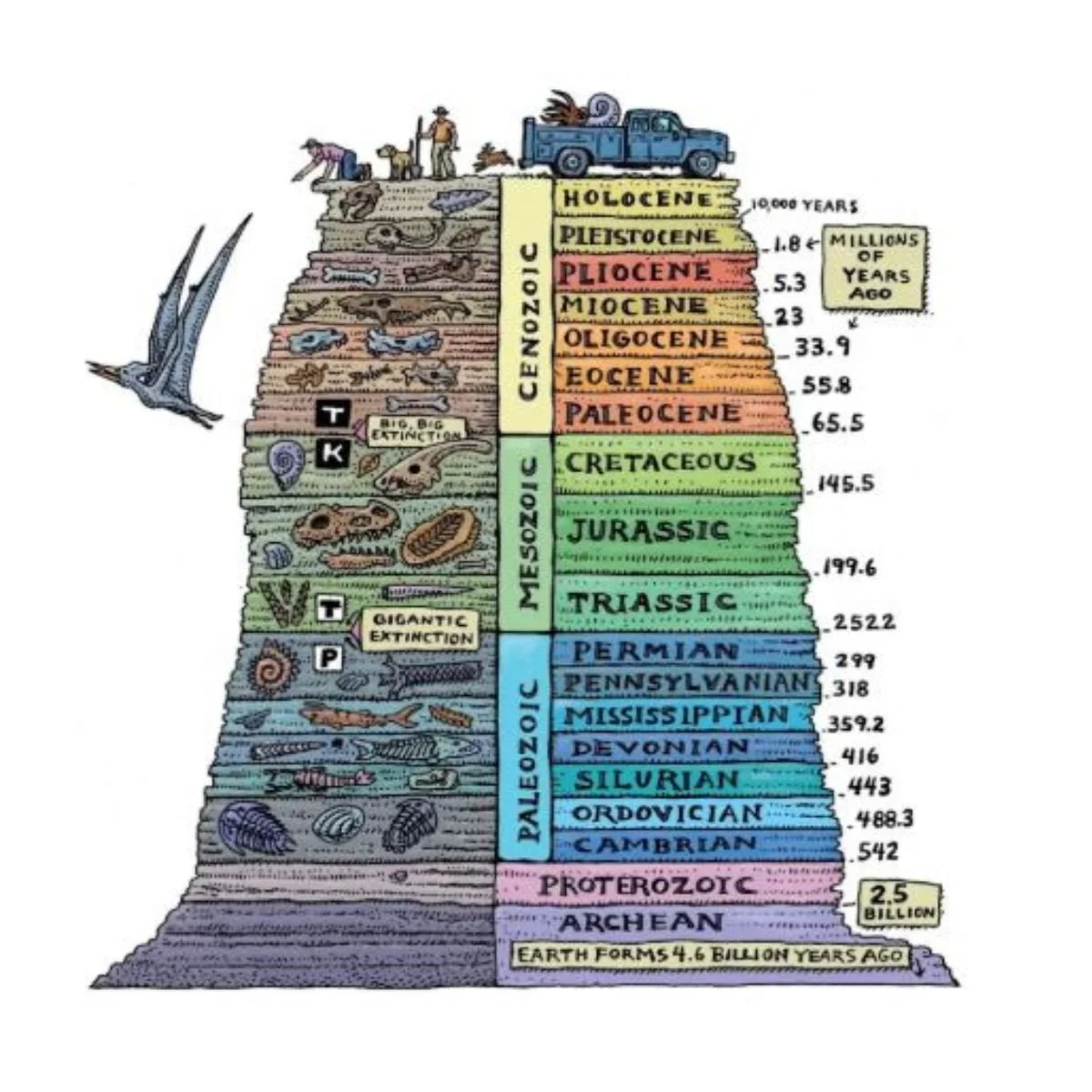
A quick dive into Deep Time shows why we need to hold a planet-sized perspective and think in geological time.
Complex life on earth really got going about 540 million years ago with an explosion of ‘forms most wondrous’. We know this era as the Palaeozoic (‘ancient life’), and it came to an abrupt end 252 million years ago with a huge extinction event – the ‘Great Dying’ – in which 95% of all life on earth disappeared. This was probably caused by massive volcanism and ejection of carbon dioxide into the air, creating conditions similar to those we are beginning to experience today. So began the Mesozoic (‘middle life’) era which lasted 200 million years or so – until an asteroid strike wiped out 50% of all life, including the dinosaurs, all over again. And so the Cenozoic (’new life’) era was ushered in, and life quite literally bloomed as flowering plants thrived and diversified, ultimately leading to human agriculture.
In the 21st century CE, scientists warn that the next huge global extinction event is well underway, this time caused by the activity of some humans. A new era is beginning and we as a species have choices and agency in making it an Ecozoic era, where planet earth again becomes home for all our kindred species. How we feed ourselves is a crucial part of a just transition to this new era.
Image Credit: Ray Troll. Find out more on the ‘Geology In’ website .
Ecozoic Launch Day
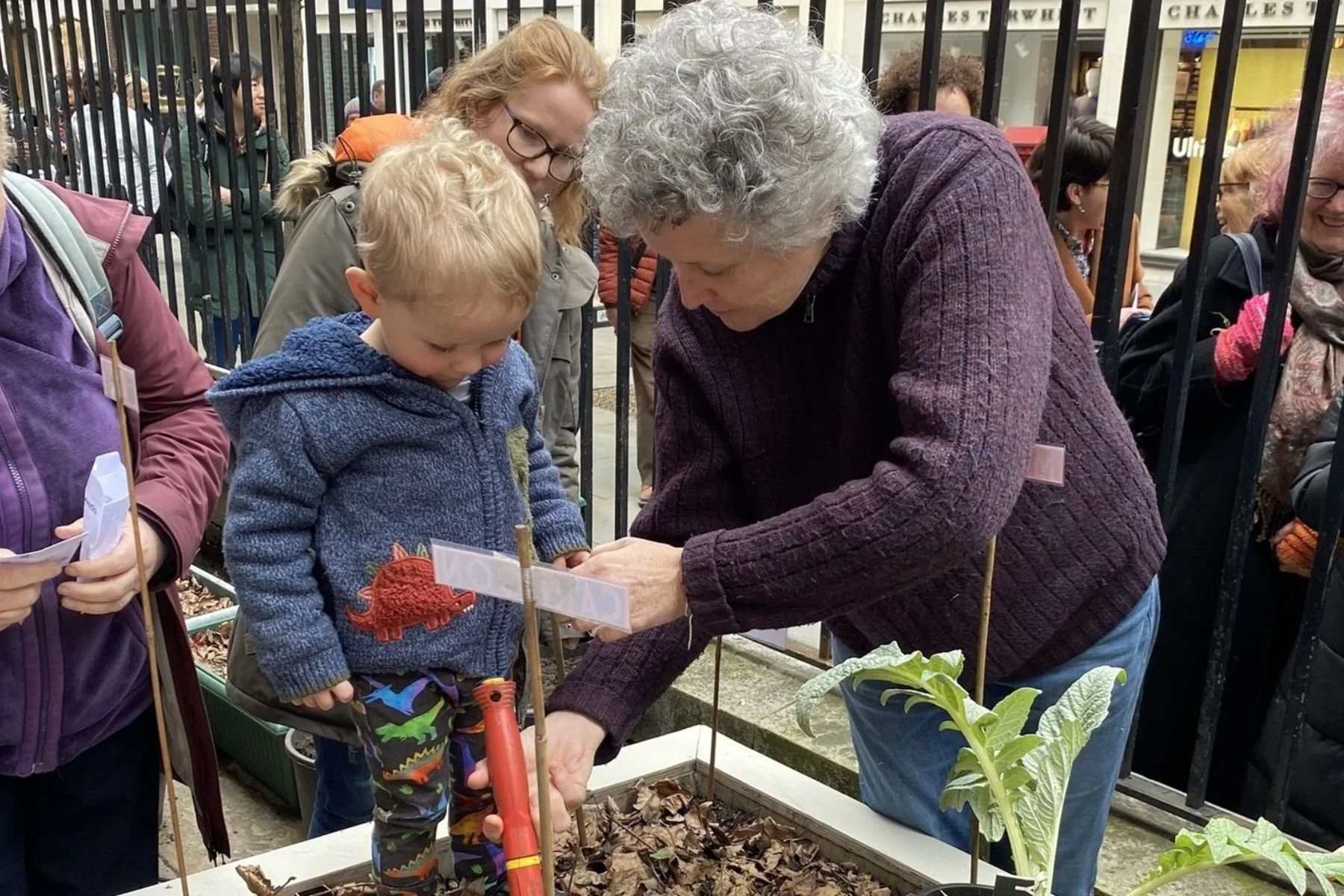
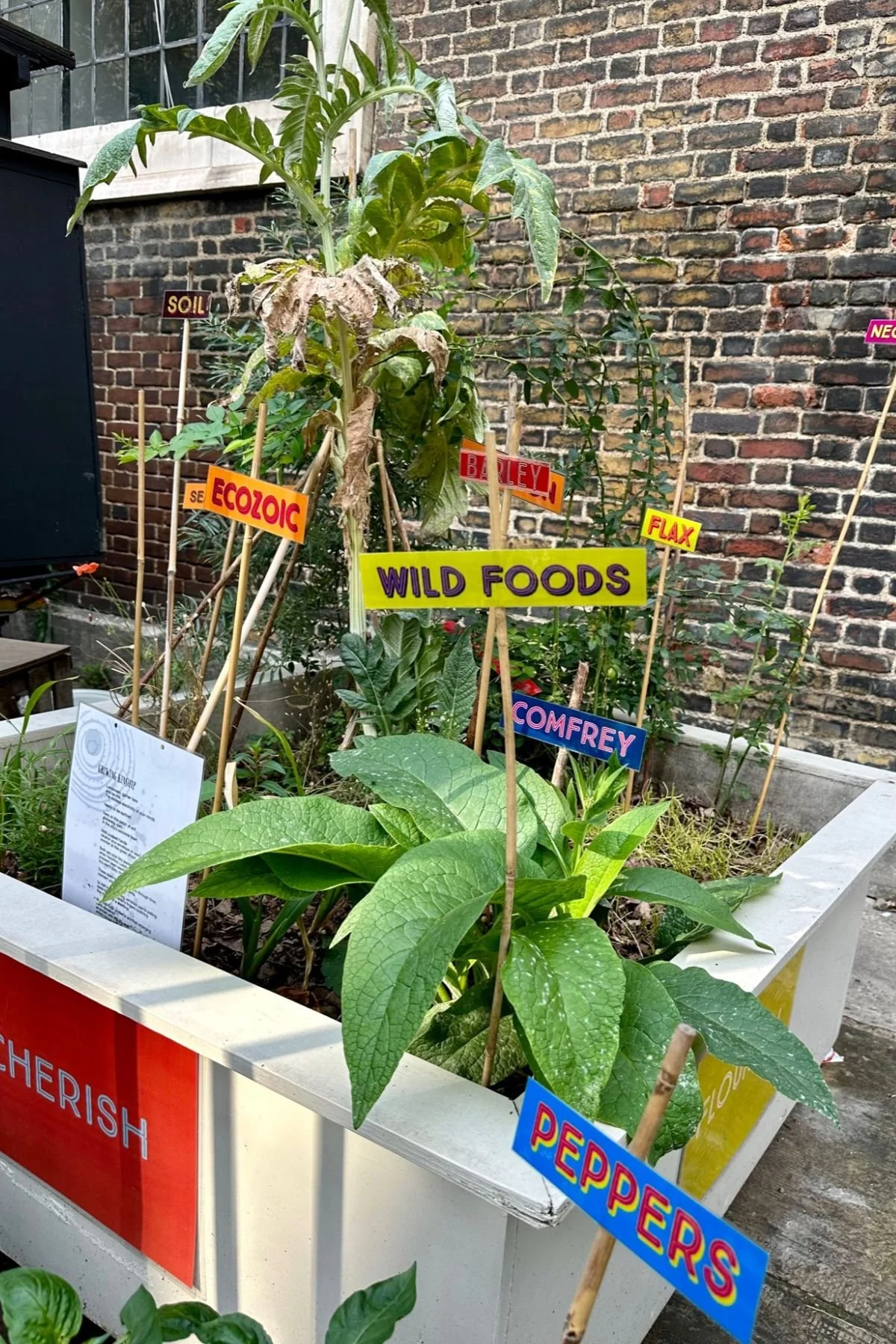
On 19th March 2023, the Grow Box, formerly home to the Daily Bread wheat crop and a profusion of AFTERMATH ‘weeds’, became a perennial polyculture, where plants providing different benefits are grown together at the same time. For example, we’ve planted ‘the three sisters’ - corn, beans and squash - grown by American First nations for millennia. This is much closer to the way the more-than-human world does things than the extractive monocultures which produce much of our food today. This style of planting enhances soil health and biodiversity, stabilizes microclimates, makes efficient use of space, builds in nutritional diversity and ensures there is something to eat year-round with no ‘hungry gap’.
We experimented with wild and cultivated plants that have a long history in Britain such as Sea Buckthorn, Celtic bean, barley, wild garlic, and flax – because who knows, we might be making our own fibres and fabrics again in the future. As we face up to a hotter, drier, less predictable future in South East England, we grew grains of the semi-arid tropics such as millet, and cardoon, the Mediterranean ancestor of the Globe artichoke.

The Three Sisters
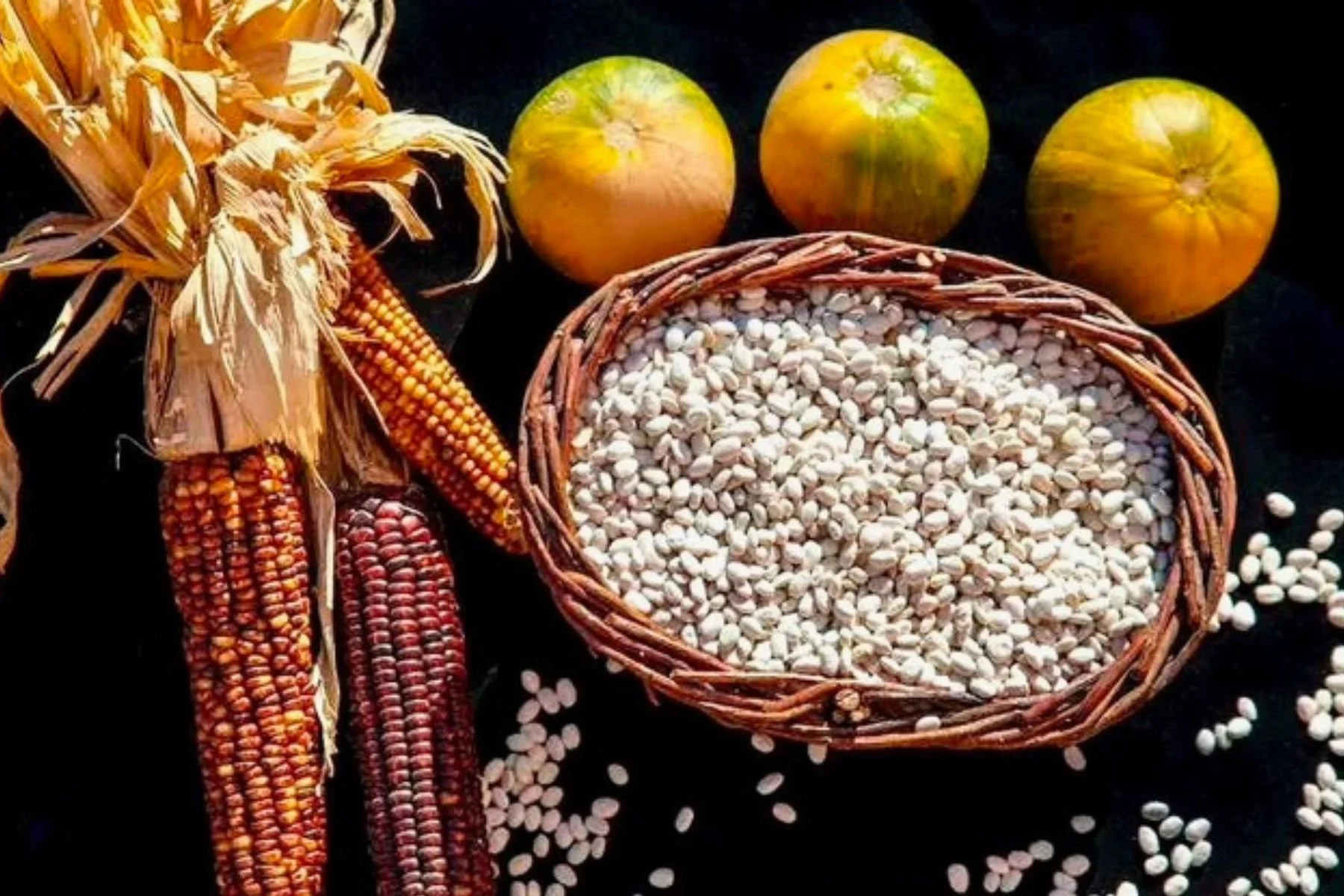
Three Sisters – corn, beans and squash – are a central part of the Ecozoic garden. Together, the sisters provide carbohydrate, protein, and vitamins/minerals. They have been grown by American First Nations for millennia, and many other cultures grow a version of this staple food combination. To many of North America’s First Nations these three plants were a sacred gift that provided physical and spiritual sustenance.
In this system of companion planting, each of the sisters contributes something different. Together, they provide a balanced diet for humans while promoting biodiversity (including pollinators) and enriching the soil for the long term. The maize/corn offers support to the others. The beans take nitrogen from the air and make it usable in the soil, providing nutrients for all three plants.The twining vines of the squash hold the sisters together, and its large leaves provide protection and shade, stabilising temperature and keeping the system moist.

Listening to Revolutionary Voices
The ‘Food the Ecozoic’ project is inspired by prophetic and revolutionary voices wherever we find them, especially indigenous peoples and plants who have long lived sustainably together in the places they find themselves, as an integral part of planet Earth. We tuned into home-grown radicals from our own indigenous traditions, learning from those who celebrate the sacredness of the Earth and the kinship of all beings, and exposing how agricultural colonisation has excluded people from their lands and disrupted the web of life.
As the Ecozoic garden grows and produces food in the coming months, these perspectives from a broad spectrum of human and more-than-human experience will help us explore how the stories we tell ourselves make us who we are. Rooted in our own traditions, we’ll need new ways to grapple with Scripture in the Ecozoic, and new theologies of God incarnate and divine immanence.


Flourishing in the Ecozoic
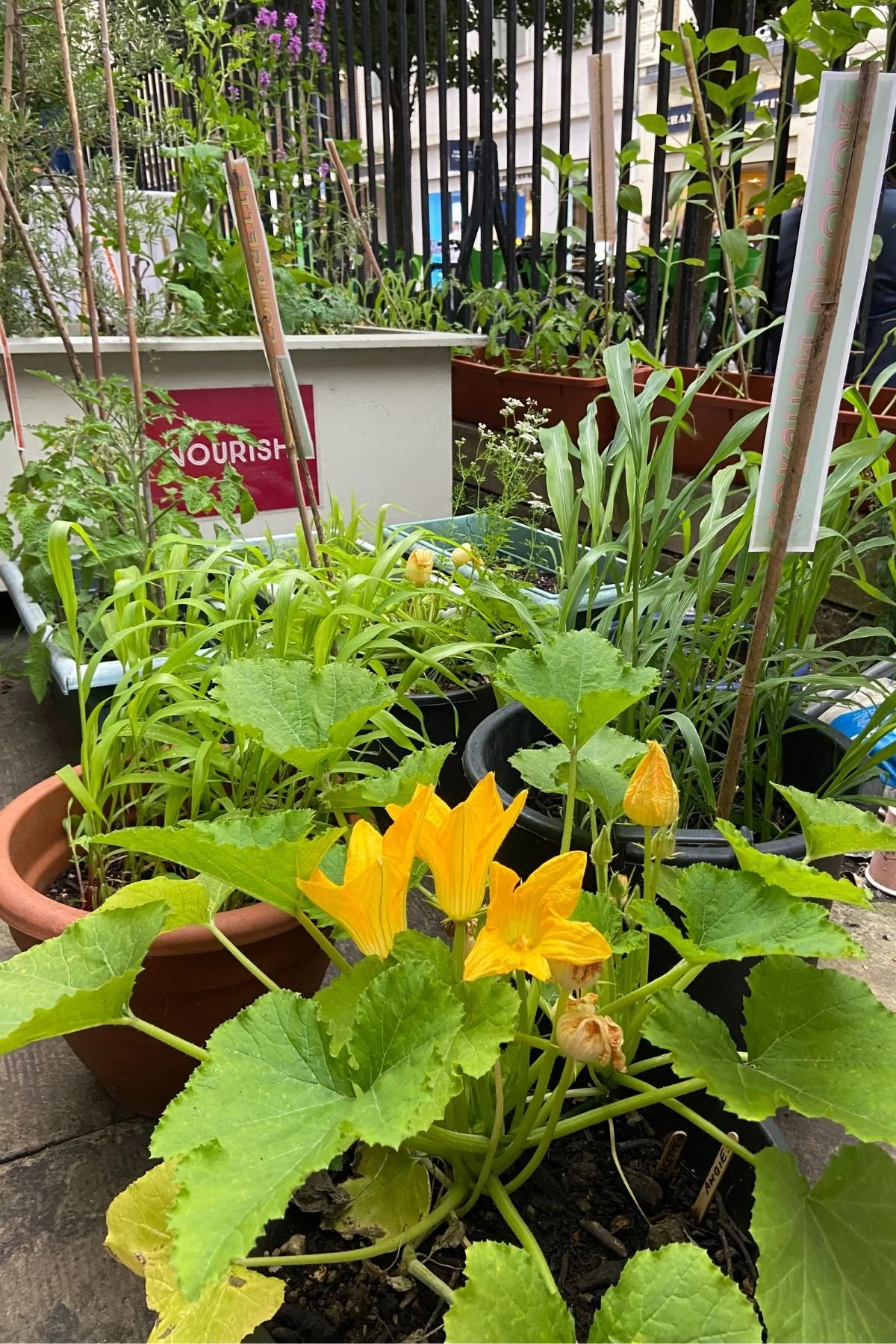
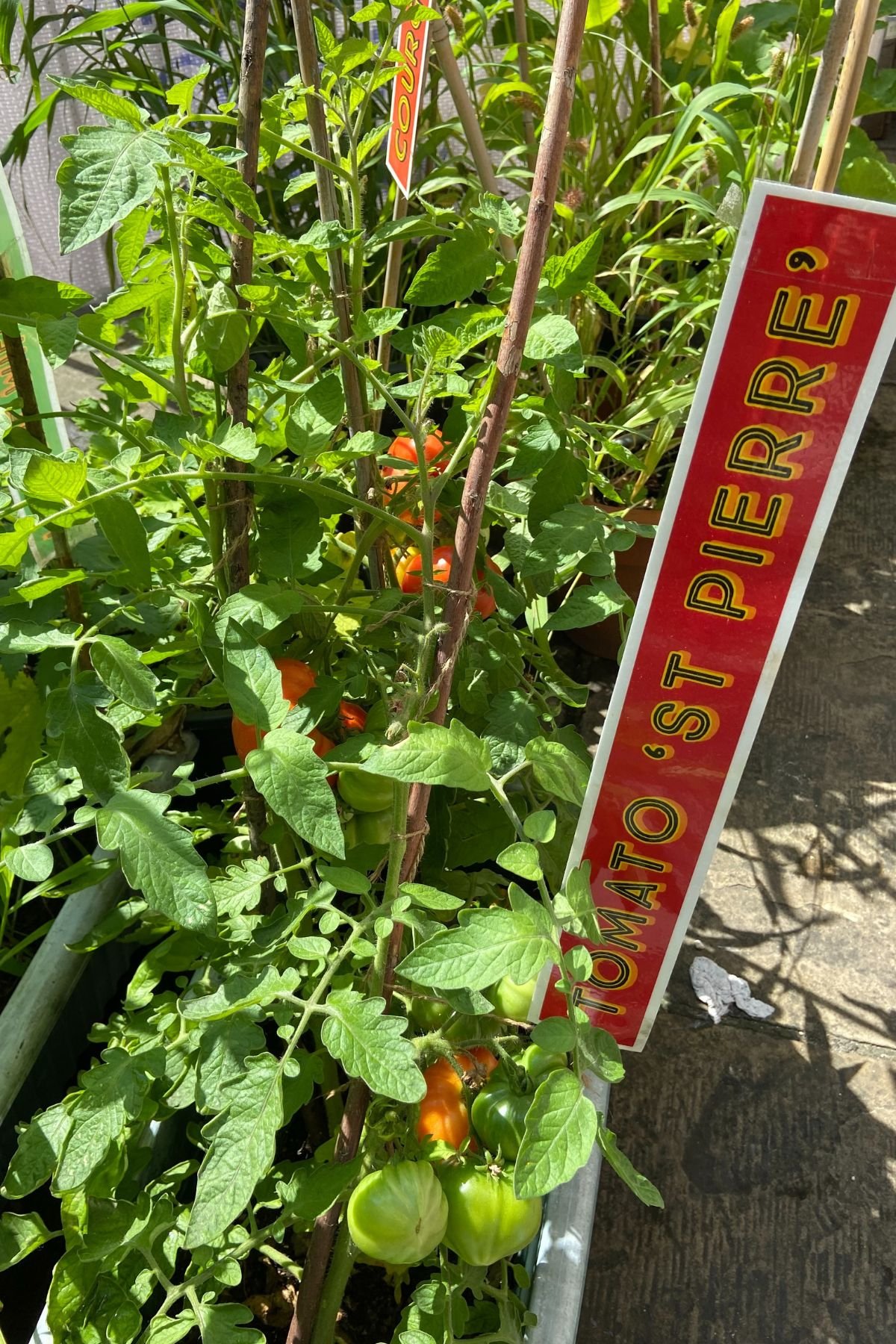
Throughout the summer the Ecozoic garden is flourishing! The Three Sisters – corn, beans and squash – are scrambling up the railings. Tomatoes and sunflowers made an appearance because of their ability to shout ‘here we are!’ to the good folks passing along Jermyn St. This sort of companion planting is ecologically revolutionary, with the capacity to change climate and ecosystems – on a very small scale in Jermyn St – but who knows what those passers-by learnt!
Harvest Festival 2023
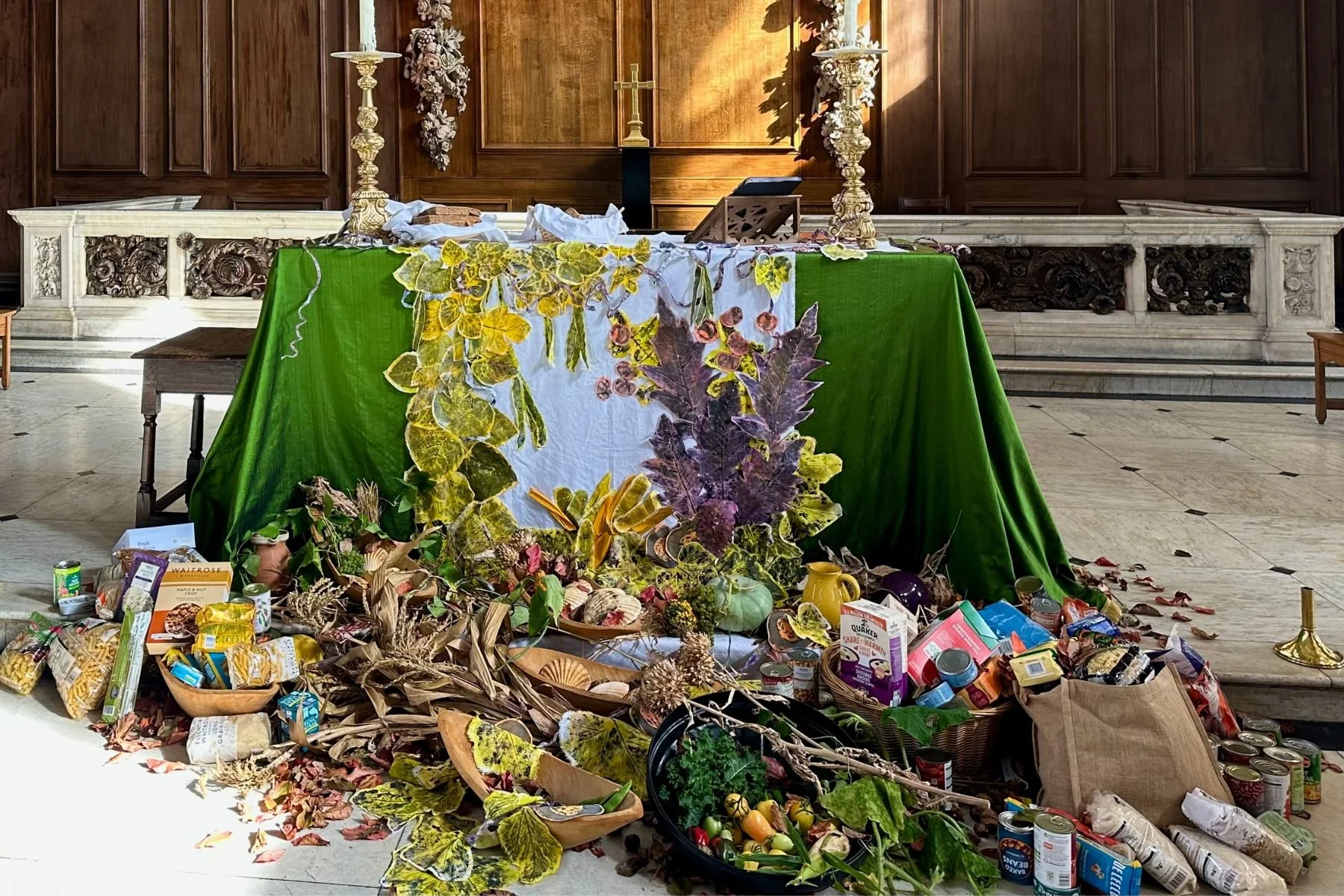
On Sunday 8th October 2023, we celebrated our Harvest Festival and the Three Sisters took centre stage. Our altar was beautifully decorated with vegetables from our Food For The Ecozoic garden with hand-painted altar cloth designed by Sara Mark and created by congregation members.
One congregation member commented that “it was incredibly moving to see so many elements of the project come together in a single moment at the Eucharist - a true harvest and moment of thanksgiving.”
Londoners, gather here
and be still.
The restless electricity of your minds
needs to be earthed
here, in this patch of soil
glistening dark
in the city’s concrete heart.
With cupped hands
receive your envelope of seed-lives;
wonder at this green shoot.
Both are your tiny passports to a time
when Neolithic Londoners
pressed bean-seeds
Into earth they cleared from forest.
Growing Kinship
by Diane Pacitti
These plant-lives connect you through time;
connect you over continents
to deft hands delving, wrinkled palms patting
back the soil; a child’s fingers touching
the miracle of a seedling;
to hands both powerful and frail emerging
earth-streaked
anointed with the life-stuff
which brings forth plant and bird, human and fly:
you will receive a communion of hope
you will know that through time and space
we are kin.
Collaborate With Us
We're always open to new ideas and creative partnerships that bring multiple perspectives into focus in the service of Earth Justice. Please get in touch.
Explore Our Projects
Explore our evolving archive of multi-disciplinary, collaborative projects. We value art, poetry, science, faith, history, community engagement and more, and the creative spaces that open up between them.