
Changing our minds: Connecting to Country
In this second series of online conversations exploring ways into an Ecozoic future, four respected Australian elders shared their experience, commitments and visions.
The Australian continent and Torres Strait Islands are home to the oldest continuous indigenous cultures in the world, spanning 300 language groups and tens of thousands of years of sustainable living.
What can we learn about our own relationship with the places we call home through listening to these stories from Australia?
Connecting to Country
Gunditjmara man Craig Molyneux suggested the name ‘Connecting to Country’. This title carries an invitation to relationship, to deep listening, and perhaps a challenge to hear language differently, to have our minds changed.
‘Country is the term often used by Aboriginal peoples to describe the lands, waterways and seas to which they are connected. The term contains complex ideas about law, place, custom, language, spiritual belief, cultural practice, material sustenance, family and identity’ (Australian Institute of Aboriginal and Torres Strait Islander Studies)
‘Country is living, responsive and caring, and the word is capitalised to denote an indigenous understanding of one’s place which connects people, socio-economic systems, language, spirit and nature through inter-relationships.’ (Sandra Wooltorton)
Freya Mathews describes Country as the ‘localisation of the living cosmos’.
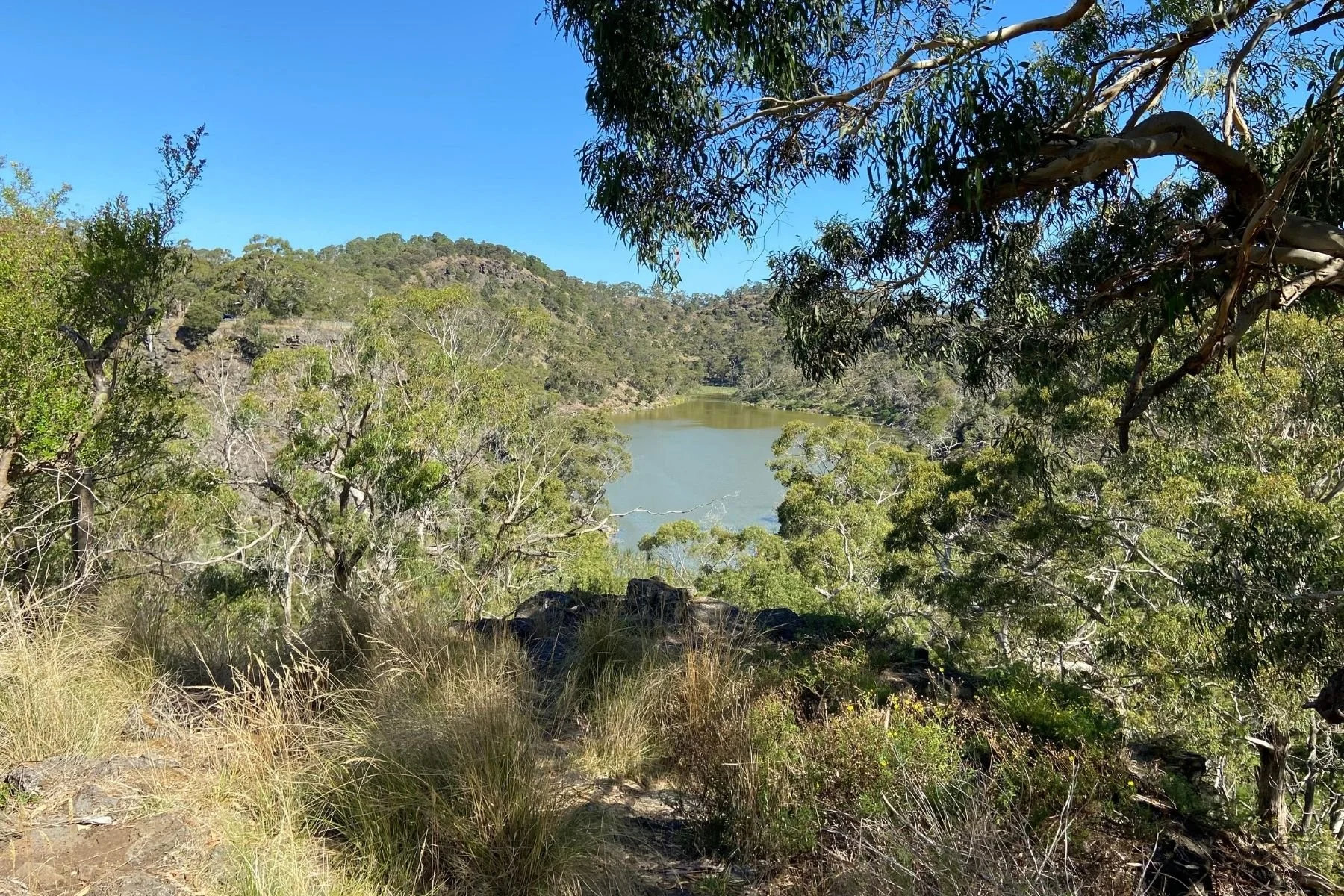
Gunditjmara Country
Our Conversationalists
Conversations were hosted by Deborah Colvin, a member of the Earth Justice team at St James’s. Deborah grew up in Australia, is an educator and environmental activist, and was formerly a farmer and agricultural scientist. She was born when atmospheric carbon dioxide concentration was 318 parts per million. In 2023, carbon dioxide peaked at 424 parts per million.
Thanks to the generosity of our conversationalists these events were offered free of charge.
In conversation with Professor Anne Poelina
Professor Anne Poelina is a Nyikina Warrwa woman from the Kimberley region of Western Australia. She is an active community leader, human and earth rights advocate, film maker and respected academic researcher, with a second PhD (First Law) titled, ‘Martuwarra First Law Multi-Species Justice Declaration of Interdependence: Wellbeing of Land, Living Waters, and Indigenous Australian People’.
Anne was awarded the Kailisa Budevi Earth and Environment Award, International Women’s Day (2022) in recognition of her global standing.
In conversation with Craig Molyneux
Craig Molyneux is a Gunditjmara man whose ancestors sustainably managed the Budj Bim area in south-eastern Australia for many thousands of years.
This area has recently been designated the Budj Bim Cultural Landscape UNESCO World Heritage Area because of its outstanding cultural value. ‘The ongoing dynamic relationship of Gunditjmara and their land is nowadays carried by knowledge systems retained through oral transmission and continuity of cultural practice’.
In conversation with Dr Anne Pattel-Gray
Dr Anne Pattel-Gray is an Aboriginal Australian theologian and author with special expertise in Black theology. She is a descendant of the Bidjara / Kari Kari people of Queensland and was the first Aboriginal person to earn a PhD at the University of Sydney. Her thesis was entitled ‘The Great White Flood: Racism in Australia; Critically Appraised from an Aboriginal Historico-Theological Viewpoint’.
Anne has exercised numerous leadership and consultancy roles in First Nations organisations and not-for-profit agencies and has an outstanding track record in ecumenism. In 2022 Anne was appointed Professor of Indigenous Studies and inaugural Head of the School of Indigenous Studies at the University of Divinity in Melbourne.
In conversation with Freya Matthews
Freya Mathews is Emeritus Professor of Environmental Philosophy at Latrobe University in Melbourne and a Fellow of the Australian Academy of the Humanities. Her first book ‘The Ecological Self’ published in 1991 and re-published in 2021 has been described as ‘illuminating the relationship between physics and metaphysics, and between knowledge and faith’ and ‘the book for which serious students of deep ecology have been waiting’. Her most recent book is ‘The Dao of Civilization: a Letter to China’. Freya’s current special interests include ecological civilization; indigenous (Australian and Chinese) perspectives on ‘regenerativity’; panpsychism; and conservation ethics. Freya also helps to care for a private conservation reserve in northern Victoria.
Explore the ‘Changing our Minds’ Series
Collaborate With Us
We're always open to new ideas and creative partnerships that bring multiple perspectives into focus in the service of Earth Justice. Please get in touch.
Explore Our Projects
Explore our evolving archive of multi-disciplinary, collaborative projects. We value art, poetry, science, faith, history, community engagement and more, and the creative spaces that open up between them.