9.45am Sunday 22nd November 2026, in the Southwood Garden at St James’s
led by Zoe Cuckow
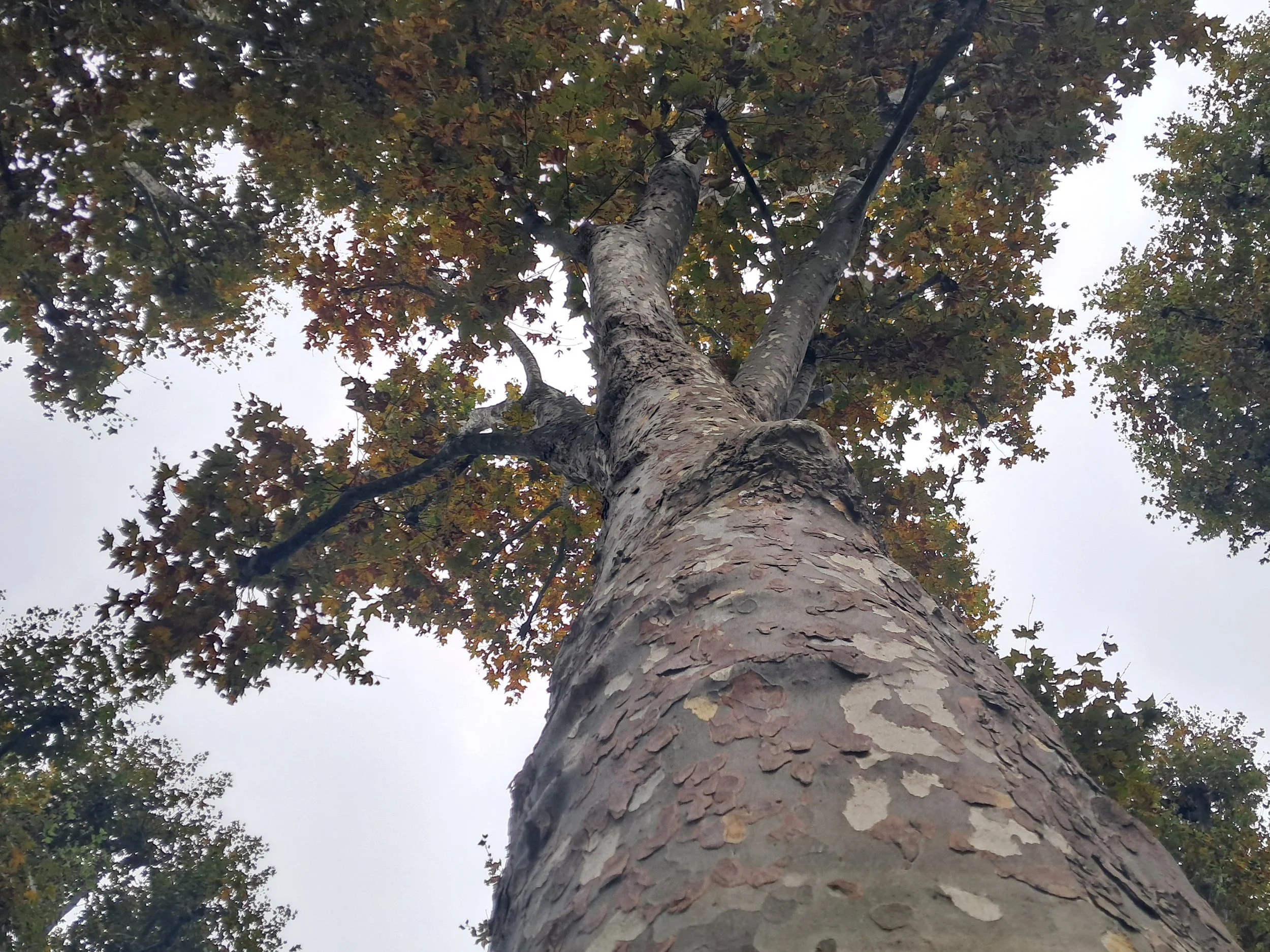
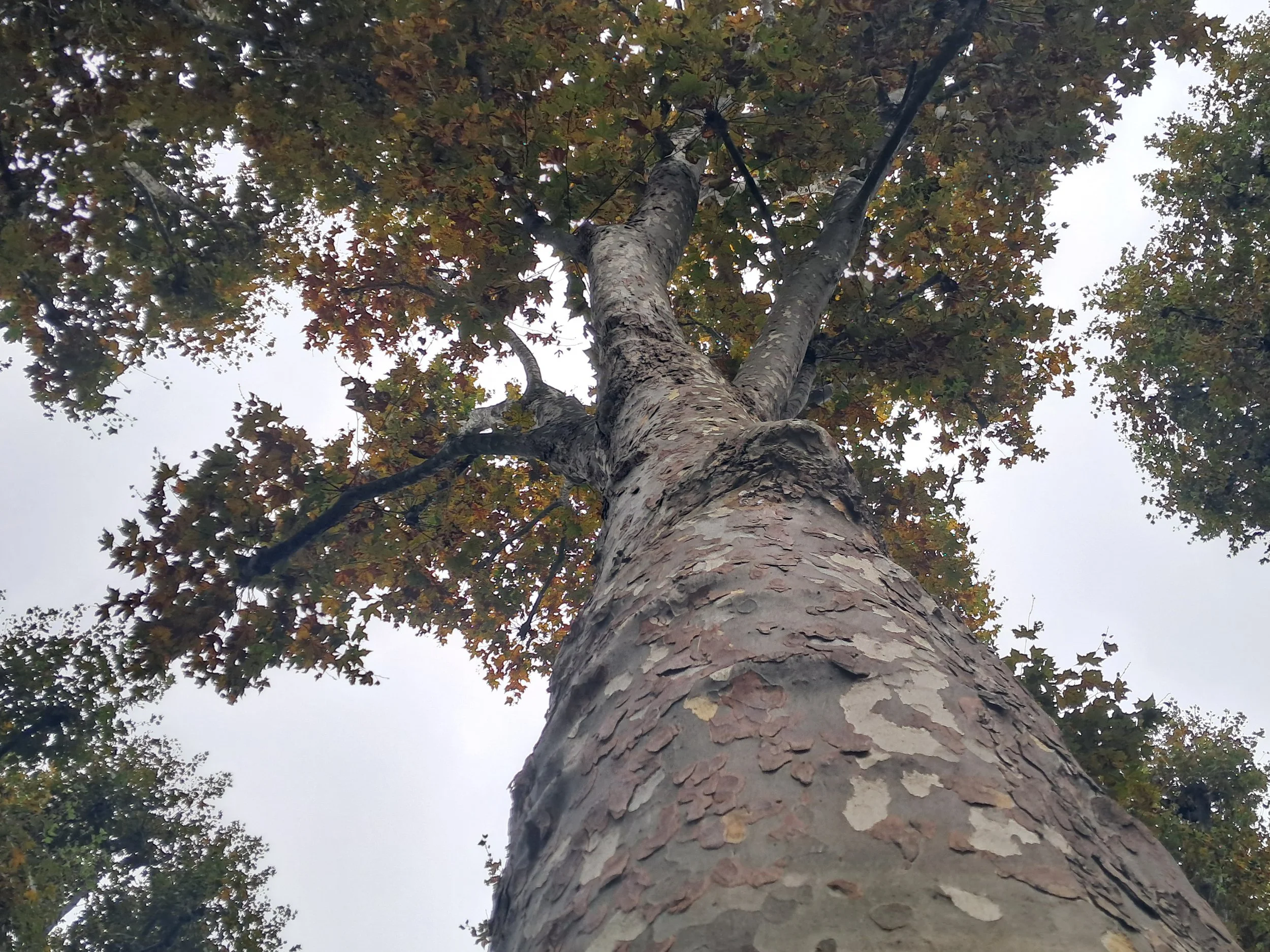
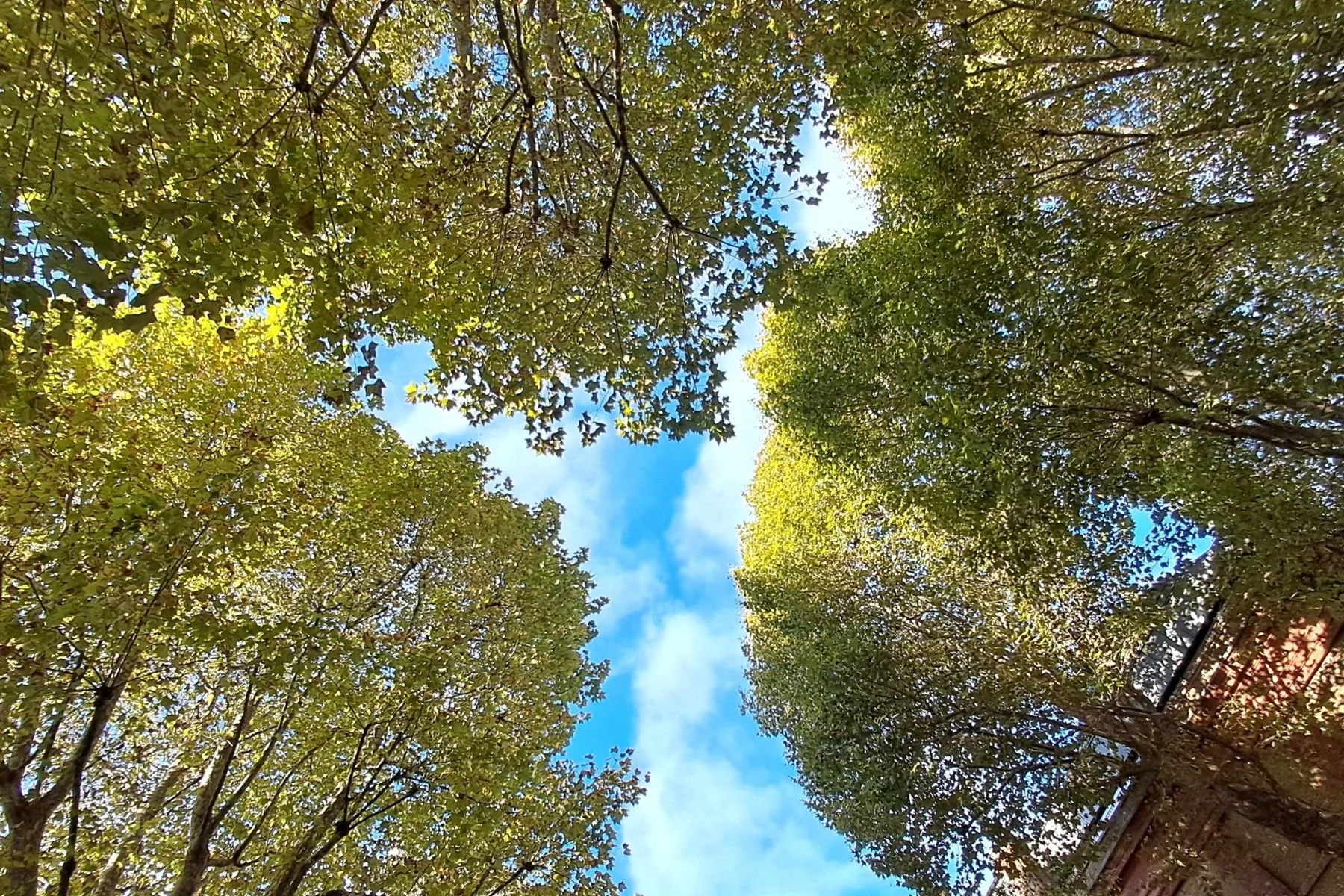
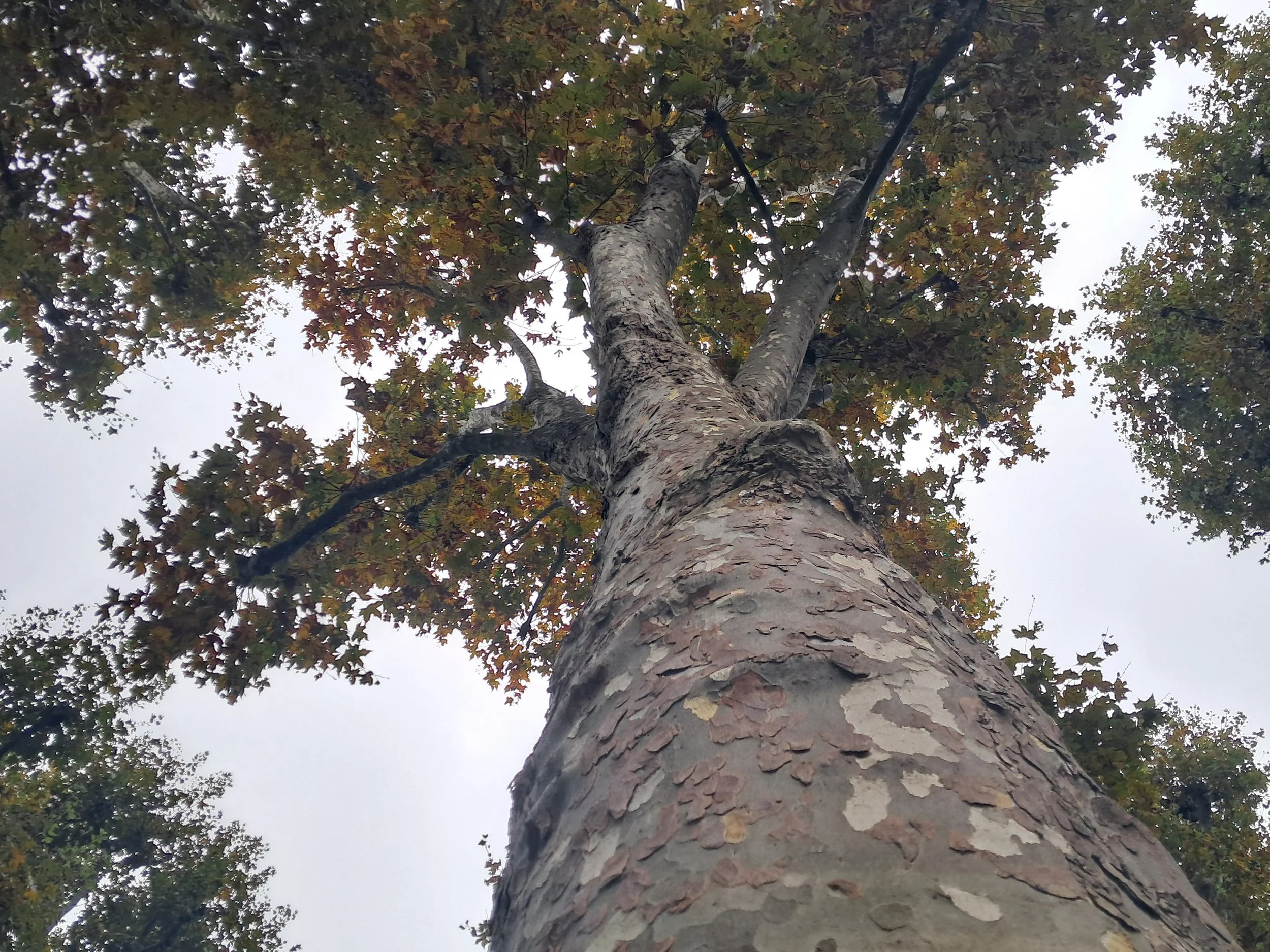
Plane tree in the St James’s garden, photo by Zoe Cuckow
Gathering
We start by settling into a comfortable position, slowly stilling our bodies and our breath, letting go of tension in our bodies. We feel ourselves rooted; reaching deep down to the earth and open to the sky. As we become present in this place, as we breathe, we open ourselves to all that is around us; the sounds of the city, every rustling branch and leaf.
Readings
As autumn pushes back into the light
And scowling time draws in
Do not howl into the blight
Let the light pour in.
Lemn Sissay
Green is the plane-tree in the square,
The other trees are brown;
They droop and pine for country air;
The plane-tree loves the town.
Here from my garret-pane, I mark
The plane-tree bud and blow,
Shed her recuperative bark,
And spread her shade below.
Among her branches, in and out,
The city breezes play;
The dun fog wraps her round about;
Above, the smoke curls grey.
Others the country take for choice,
And hold the town in scorn;
But she has listened to the voice
On city breezes borne.
A London Plane-Tree, by Amy Levy (A Victorian poet)
In the Southwood Garden, one of the things you notice first is the towering Plane trees, which are a very common sight in our London parks and streets. The Victorians started planting them all over the city about 200 years ago, copying the plane tree-lined boulevards of Victorian Paris. In central London, the oldest living Plane trees are in Berkeley Square in Mayfair, which were probably planted in 1789. Today, one recent study estimates that now over 50% of trees in London are Plane trees.
Today these trees play an important role in improving London’s air quality. A 2011 study estimated that every year, trees in Greater London remove between 850 and 2,000 tonnes of PM10 pollution particles, which are harmful to human health.
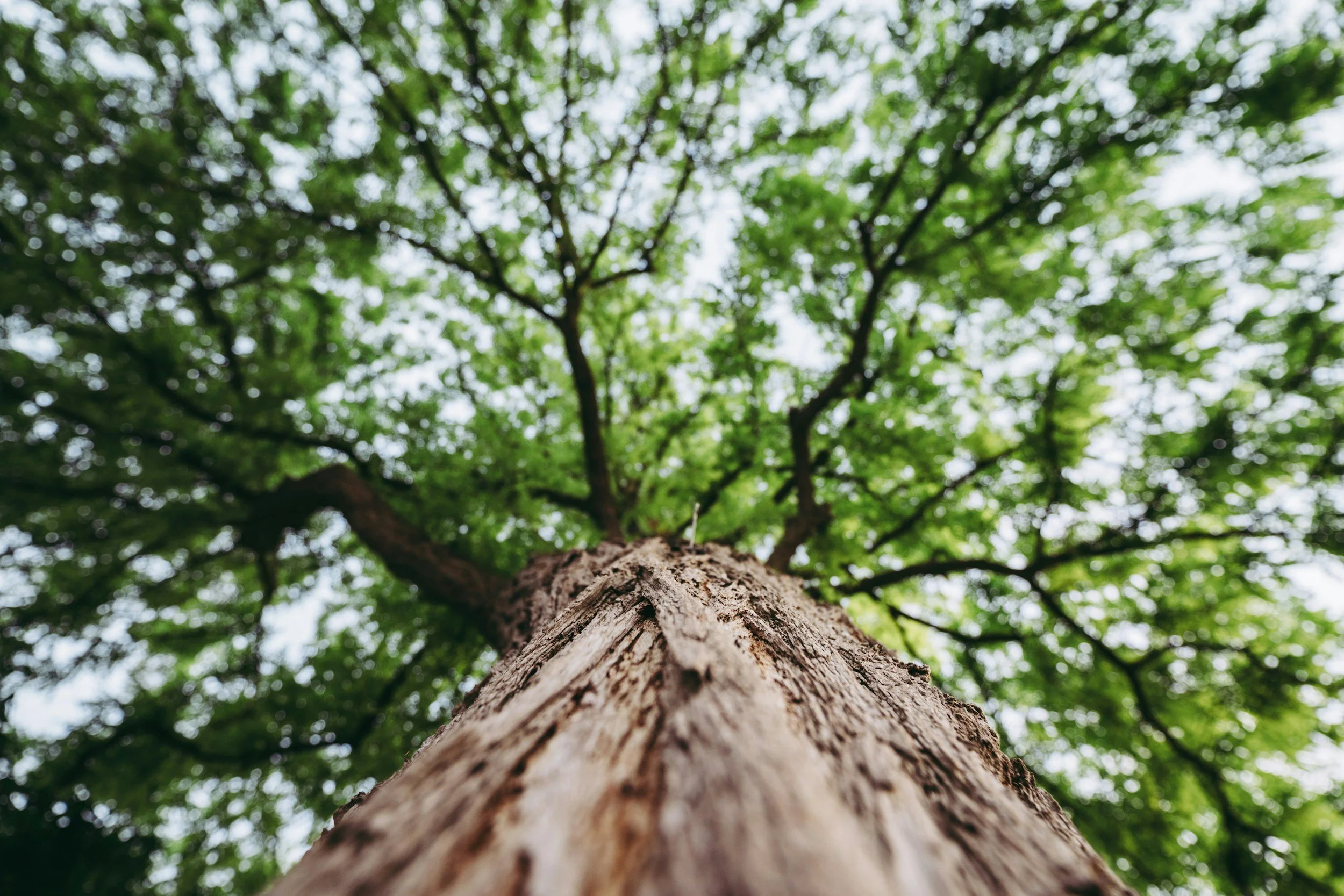
The Plane tree’s resilience and ability to cope with dense urban smog, soot and smoke was their main appeal to Victorian London city planners. Their mottled, flaking bark not only looks beautiful but also helps protect it. All trees 'breathe' or exchange gases through pores or small slits (lenticels) in their bark. As the plane tree grows and expands each year, its bark can’t stretch or grow fast enough, so the tree sheds it and replaces it. When the old bark is discarded, the air pollution particles, parasites and fungus stuck to the bark or trapped in the hairs on the leaves are removed too, so these don’t infect the tree and it stays healthy.
Veins violently pulsing.
Skin flaking with age.
Ancient dried rivers
Leading to sage.
Rippling wood sea.
Slashed with Nature’s knife.
Roads on a crackling map
Leading to life.
Fiona Schwartzinoff
Individual contemplative time (15 minutes)
We now have 15 minutes for silent contemplation in the garden or, for those online, a space where you feel you can connect with the nature around you.
Regathering
A time to share any experiences we have had in our time of contemplation
Concluding readings
I am looking at trees
they may be one of the things I will miss
most from the earth
though many of the ones I have seen
already I cannot remember
and though I seldom embrace the ones I see
and have never been able to speak with one
I listen to them tenderly
their names have never touched them
they have stood round my sleep
and when it was forbidden to climb them
they have carried me in their branches.
W. S . Merwin
The dying end of summer
Brings to life the leaves
They signal one another
And escape from the trees
Lemn Sissay
Closing Prayer
God of city and sky, we pause at this turning of the year,
Surrounded by these precious plane trees,
May we find rest and shelter beneath their branches.
In the frantic pace of this city, may we put down roots, and draw strength from the earth’s depths,
Like falling leaves and flaking bark, may we shed what no longer serves us,
May these trees be our living guide and anchor,
drawing us ever deeper into wonder.
Amen
Upcoming Eco-Contemplative Liturgies
View More Eco-Contemplative Liturgies